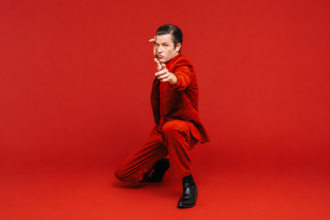





South London’s Sam Akpro releases ‘Dusty,’ a reflective new single about looking back on addiction, his first music since debut album Evenfall on ANTI-
Sam Akpro released “Dusty“ on June 30, 2026, and it is the first new music from the South London artist since Evenfall, his debut album on ANTI- that landed in March 2025 to some of the strongest critical reception of any UK debut that year. Rolling Stone UK called him “genre-less” and meant it as a compliment. Dork gave the album four out of five.
The Line of Best Fit praised its inner-city soundscapes as simultaneously dream-like and grounded. “Dusty” arrives into that context as a step away from the nocturnal South London noir of Evenfall and toward something more explicitly personal: a song about looking back on addiction.
Evenfall was already a record built from difficult material. Akpro described writing it during 2023, a period he characterized as one of genuine depression: no money, cycling home at 4am after pub shifts, spending winters doing drugs and then spending summers dealing with the aftermath. “In 2023, I was definitely quite depressed,” he told Dazed.
“I’d just got a job in a pub. You go there, start at 6pm, work till 1am, you’re there in a lock-in till 3am, and then you cycle home at 4am.” “Dusty” takes that same period and examines it from a different angle, the specific work of looking back on where you were and what you were doing to yourself, rather than living inside it in real time.
Where ‘Dusty’ Fits in Sam Akpro’s World
The sonic world Akpro built on Evenfall drew comparisons to Wu-Lu, King Krule, and Sonic Youth in the same breath as J Dilla, and NME described him as “an artist with an intensity at his core.” That intensity is what made the debut album land as something more than a genre exercise. Akpro grew up in Peckham, started making music at night to avoid disturbing his parents at their house, and built his reputation through festivals including Green Man, Pitchfork Paris, Outbreak, and Reeperbahn, alongside BBC 6 Music support from Mary Anne Hobbs and BBC Radio 1 play from Jack Saunders.
The critical infrastructure around Evenfall, and the fanbase it built through genuinely incendiary live shows, gives “Dusty” a reception context that most artists releasing a post-debut single do not have. “Dusty” does not yet have a full set of details around it at time of publication, but the thematic positioning is clear: this is a song about the version of himself that Evenfall documented, written from the other side of it. The Spotify catalog already shows a 2026 entry titled “Wayside” alongside the new single, suggesting that the post-Evenfall creative period is already producing material at pace.
The Bigger Picture: South London’s Most Restless Voice
Akpro has consistently resisted easy genre placement, a fact that has made his critical reception unusually broad across publications that do not often share enthusiasm for the same artists. The Face named him one of their seven names to know in the summer of 2024. The FADER, DIY, Clash, and Notion have all covered his work. That breadth reflects something real in the music: a South London artist who absorbed grunge and rap and jazz and dub in equal measure and produced something that belongs to none of those traditions entirely.
“Dusty” is the first indication of where that restlessness goes after Evenfall. The subject matter, addiction looked at from behind rather than from inside it, suggests an artist who has moved through something and is now writing from a position of clarity rather than immersion. Whether “Dusty” is a standalone release or the first signal of a new project remains to be confirmed. Either way, it is exactly the kind of material that made Evenfall matter in the first place: honest, specific, and produced by someone who has clearly lived inside every word of it.