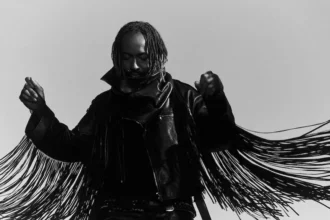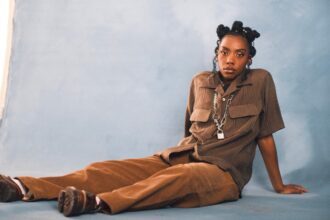


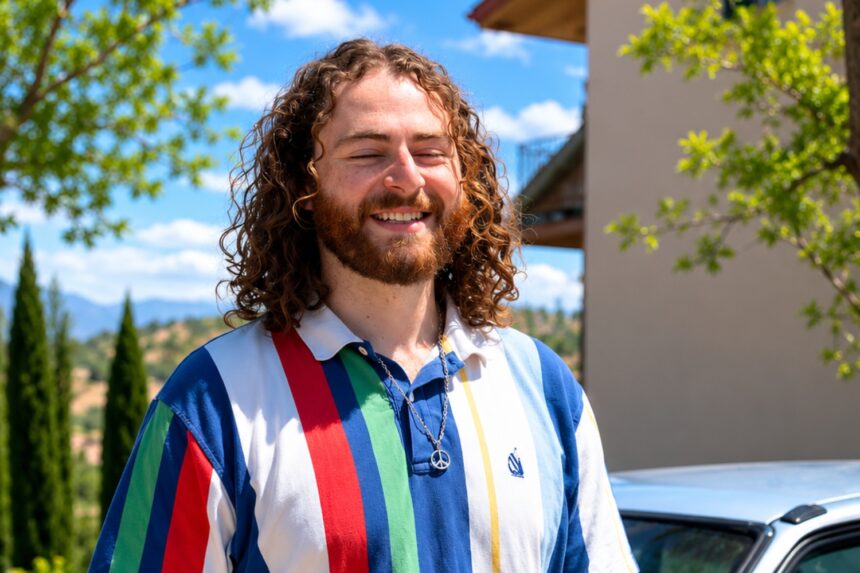
Multi-instrumentalist Noah Jesse blends jazz, soul and hip-hop into a genre-fluid sound built from Jewish temple singing, Black church soul and Kamasi Washington
Noah Jesse does not move in a straight line. The New York-born, Los Angeles-based multi-instrumentalist, producer, and songwriter has built his sound from an unusually wide set of origins: Jewish temple singing, Black church choir tradition, classical piano, jazz trombone, Hip Hop production, and the restless creative instincts of an artist who treats music as both language and lifeline. His public single “Feel Again,” with its nostalgic New Jack Swing feel and emotionally open center, is the most direct entry point into what he is building. But the full picture is considerably more complex.
His connection to Kodak Black is one of the more unexpected details in a story full of them. Noah connected with Kodak via a mutual, and the two linked for a live video that is best understood by watching Noah tell it himself in the full interview video. It is not what you expect, and that unpredictability is part of who Noah Jesse is as an artist and as a person navigating a music industry that rarely rewards the kind of multi-directional creative profile he is developing.
Instruments, Improvisation, and the Sound of Formation
Noah’s instrument list is not short. Trombone, trumpet, euphonium, drums, bass, guitar, piano, voice, and percussion all sit in his toolkit, alongside synthesizers, MIDI keyboards, and Ableton as production tools. Guitar is a newer addition. The trombone is where his identity was first fully formed: a bold improvised solo on “The Chicken” in eighth grade gave him his first real moment of public recognition and showed him what it felt like to take a musical risk in front of people and land it.
Jazz remains the anchor, with Kamasi Washington representing his clearest contemporary touchstone for what the form can become when it expands outward into choirs, orchestras, and ensemble work without losing its improvisational core. The advice that shaped Noah’s approach most directly came from a drum teacher who told him to “play what you hear.” That instruction became a philosophy. It helped him trust instinct over technical perfection, lean into vulnerability rather than away from it, and eventually extend that same openness to rapping, an area he initially doubted himself in before a close college collaborator pushed him to treat it as another outlet rather than a separate category requiring separate proof.
The vocal identity he brings to all of this carries weight from two specific traditions. Growing up around both Jewish temple singing and Black church choir gave him a foundation marked by runs, warmth, and spiritual texture that is not easily replicated by someone who did not live inside those traditions. That background informs his soul sensibility more than any single stylistic influence and gives his performances a lived-in quality that technique alone cannot produce.
‘Feel Again,’ Songwriting, and What Comes Next
Noah’s songwriting has evolved significantly. Earlier work leaned into political and social commentary. More recently, the writing has moved toward love, vulnerability, healing, and self-reflection. “Feel Again” captures that evolution precisely: a New Jack Swing-influenced production frame carrying an emotionally open lyric that functions as a strong and accessible introduction to his artistic identity. He also embraces freestyle singing as a compositional method, using improvised melody and spontaneous phrasing to develop song ideas in the same way a jazz soloist develops phrases: not planned, but true.
Now based in Los Angeles, Noah is currently exploring big-band composition and arrangement, a direction that brings his skills as composer, conductor, and performer into direct contact with each other. He cites Steve Lacy as a model of modern musicality with genuine substance, an artist who balances songwriting, production, and emotional specificity without sacrificing any of the three. Noah Jesse is still rising. But the foundation is already clear, and it is built on more than most artists his age have access to.