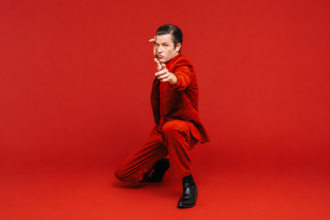
Miami bass pioneer DJ Matrix returns after nearly 40 years with new single “Drift Away” under his House Of Neo alias. A founding voice reclaims the floor
Demetrius “DJ Matrix” Ford, the South Central Los Angeles-raised Miami bass and electro pioneer, has returned to music after nearly four decades away with “Drift Away,” released June 5, 2026, under his new alias House Of Neo. The single arrives alongside a remake of his foundational track “Feel My Bass,” reissued as “Feel My Bass (Reloaded),” together marking the most significant return in underground electronic music’s current revival cycle. For a scene that has spent years interrogating its own origins, this is not nostalgia. It is the original source re-entering the conversation.
The story behind DJ Matrix is one that the EDM mainstream has never fully told. Growing up in South Central Los Angeles during the 1970s and 80s, Ford was immersed in music before he ever touched a piece of equipment. His mother was a professional singer who performed alongside Marvin Gaye and The O’Jays, and home for a young Demetrius meant watching rehearsals, absorbing arrangements, and developing an ear that most producers spend years trying to build. That early grounding took him to the drums, then to church performances and local bands, and eventually to the raw electronics of Miami bass and electro at a moment when that sound was wiring a generation.
What ‘Drift Away’ Actually Sounds Like
“Drift Away” is the product of that full arc made audible. As the debut release under the House Of Neo alias, the track functions as a bridge rather than a throwback: it honors the hard-hitting low frequencies and mechanical rhythms of classic Miami bass and electro while engaging with the production textures of 2026. DJ Matrix has been clear about the distinction. He is not reassembling the past. He is applying decades of lived knowledge to new tools, and the result reflects exactly that. The track does not feel like a museum piece. It feels like a working blueprint.
The revival context around “Drift Away” matters. Electronic music in 2026 is in a genuine reclamation phase, with producers and DJs across Europe and North America openly tracing lineage back to the foundational electro-funk of the 1980s. Labels and scenes that have built entire identities on that excavation work are hungry for credibility that cannot be manufactured. DJ Matrix does not need to manufacture anything. He was there when the architecture was being built.
A Risk Taken on Purpose, and a Family Behind It
What separates this comeback from others is the personal weight Ford has attached to it. His children, he has said, only recently discovered this chapter of his life, and their response became part of the fuel for the return. “They are proud of me, not only because I’m playing music, but also because I’m taking this necessary risk,” he has said. That framing is deliberate. This is not a legacy cash-in. It is an artist who walked away from the spotlight for nearly forty years, built a life, and chose to step back into creative work not because the industry called but because the unfinished business of the music itself did.
The dual-identity approach, releasing contemporary work as House Of Neo while honoring original material under the DJ Matrix name, reflects a sophisticated understanding of how to re-enter a scene without flattening a history. The electro community has been watching. And with “Drift Away” now available across streaming platforms, alongside the reloaded version of the track that started everything, DJ Matrix is giving both longtime followers and the new generation of electro heads a complete entry point into a catalog that never lost its currency, even when its creator stepped away.
In a genre culture that sometimes prizes novelty over foundation, “Drift Away” is the rare kind of release that holds both at once.