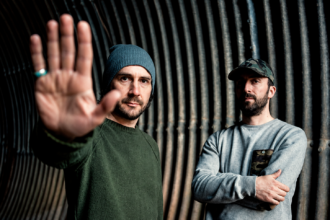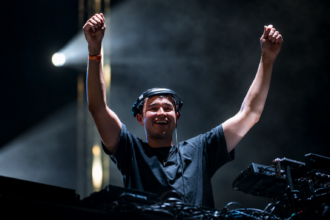
Canadian producer Daijo returns with ‘Sacred Dance,’ a cinematic melodic techno single built for peak-time festivals and headphone listening alike
Melodic techno spent the back half of the 2010s becoming electronic music’s most reliable emotional shortcut, and the genre now carries a familiar problem: when every track is built to feel enormous, very few of them feel like anything at all. Daijo‘s “Sacred Dance,” out now on all major platforms, is the Canadian producer’s argument that the answer is not more scale but more intention. It is a record about what actually happens in a room full of people, and it is built to work at festival volume and through headphones without changing its mind about what it is.
The track sits in the space between melodic techno and house, which has become the most crowded and most interesting real estate in dance music. Rich synth work carries the melodic weight while organic percussion keeps the groove human rather than gridded. The arrangement moves in subtle shifts rather than the blunt drop-and-release structure that dominates the lane, and the cinematic layering rewards listening past the first ninety seconds. That patience is the point. Daijo has said he is more interested in timeless songwriting than in chasing trends, and “Sacred Dance” is structured accordingly, unfolding instead of detonating.
A Sound Built on Connection
Thematically the record is about unity and presence, the transformative thing that happens when a crowd stops being individuals for a few minutes. That is a well-worn idea in dance music, invoked constantly and earned rarely. What gives Daijo’s version some weight is where it comes from. Born in Hamburg and raised in Vancouver by his mother, an Iranian refugee, his life has been shaped by movement, displacement, and reinvention, and he points to those experiences as the foundation of a catalogue organised around emotional connection rather than convention.
His stated mantra is to “shape songs from the heart, create sounds from within, and touch people with timeless music,” which reads like press-release language until you notice how consistently the productions actually follow it. Whether he is playing an intimate club or a festival stage, the goal he describes stays the same: building moments that pull a room together.
The Lane He’s Working In
Context matters for understanding what Daijo is up against and what he is drawing from. Melodic techno emerged in Europe in the late 2000s and early 2010s, blending techno’s rhythmic architecture with progressive house, trance, and ambient influence, and it went global in the second half of the 2010s behind artists like Tale of Us, Stephan Bodzin, and ARTBAT, and labels including Afterlife and Innervisions. It is a European-born genre with a European centre of gravity, which makes a Canadian producer working seriously inside it a slightly outside proposition.
That outsider position is arguably the most interesting thing about the project. Canada’s electronic scene has historically exported house and techno talent without getting much credit for it, and Daijo is building in that tradition, refining a specific emotional register rather than jumping between whatever is charting on Beatport. “Sacred Dance” is another step in that direction, less a bid for a moment than a brick in something longer.
“Sacred Dance” is available now on all major streaming platforms.