


Creamfields unveils Runway 2.0, a new 20,000-capacity mega-stage merging Runway and HALO, for its 2027 edition
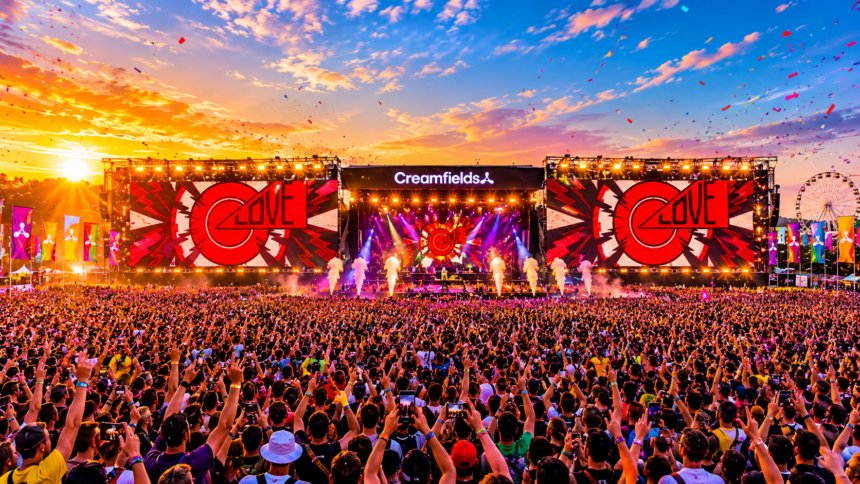
Creamfields is rebuilding one of its most beloved rooms from the ground up. The UK dance institution has unveiled Runway 2.0, a new 20,000-capacity mega-stage that fuses two of its most celebrated recent concepts, the fan-favourite Runway and the 360-degree HALO, into a single structure for its 2027 edition. The stage will debut when the festival returns to the Daresbury Estate in Cheshire from August 26 to 29, 2027, over the summer Bank Holiday weekend.
For a festival that has spent the past few years turning stage design into a headline attraction in its own right, this is a statement of intent. Runway 2.0 is not a refresh. It is a ground-up merger of two ideas that each earned their own followings, and Creamfields is positioning it as the centrepiece of what it bills as a landmark anniversary year.
Where Runway Meets HALO
The pedigree here matters. Runway 2.0 comes from Lucid Creates, the design team behind both the original Runway and the HALO concept, who have worked with Creamfields since 2022. That continuity shows in the concept. Runway first appeared in 2022 and quickly became a fan favourite for the way its structure extended out above the crowd. In 2025 it evolved into HALO, a 45-metre circular arena wrapped in 360-degree and overhead video, lighting and sound. Demand for Runway’s return is what pushed the team to combine the two rather than choose between them.
The specs back up the ambition. Runway 2.0 spans a 60-metre by 40-metre footprint and marries HALO’s circular, immersive layout with Runway’s signature over-crowd architecture. At the centre sit three 15-metre overhead diamond structures lined with LED screens, feeding an overhead display more complex than anything the festival has run before, with sweeping visuals and dynamic lighting that flow from the stage out across the diamonds. Crucially, the DJ is placed at the dead centre of the arena, surrounded on all sides, a staging choice that collapses the usual distance between artist and crowd.
That in-the-round approach is where the production thinking gets interesting. Centre-staging a DJ changes everything about how a set reads, from how the lighting wraps the booth to how the crowd energy circulates, and it is a format still relatively rare at this scale. For Creamfields, it is a bid to make the stage itself the story, the kind of visual spectacle that travels on social media and sells tickets long before a single name is confirmed.
A Flagship Year Taking Shape
The reveal lands as a flagship edition, framed by the festival as its 30-year anniversary, comes into focus. Creamfields has already begun building out its 2027 bill elsewhere on site, with the main ARC stage set to host a back-to-back-to-back headline set from Josh Baker, KETTAMA, and Prospa on Friday, August 27. The Prodigy, Hannah Laing, Jamie Jones, and Marco Carola have also been announced, with more names expected before next summer.
Taken together, the early moves suggest a festival leaning hard into both spectacle and underground credibility, pairing a showpiece stage with a lineup that nods to house, techno, and rave heritage rather than relying solely on EDM’s biggest-room names. It is a balancing act Creamfields has refined over its long run, and Runway 2.0 is the physical expression of it.
The full Creamfields 2027 lineup will continue to roll out in the months ahead, but the headline for now is architectural. A new 20,000-capacity arena, built by merging two of the festival’s most successful stage concepts into one, will anchor the Daresbury site when the gates open on August 26, 2027. For a festival that treats production as a main attraction, Runway 2.0 is the clearest sign yet of how high it intends to set the bar.