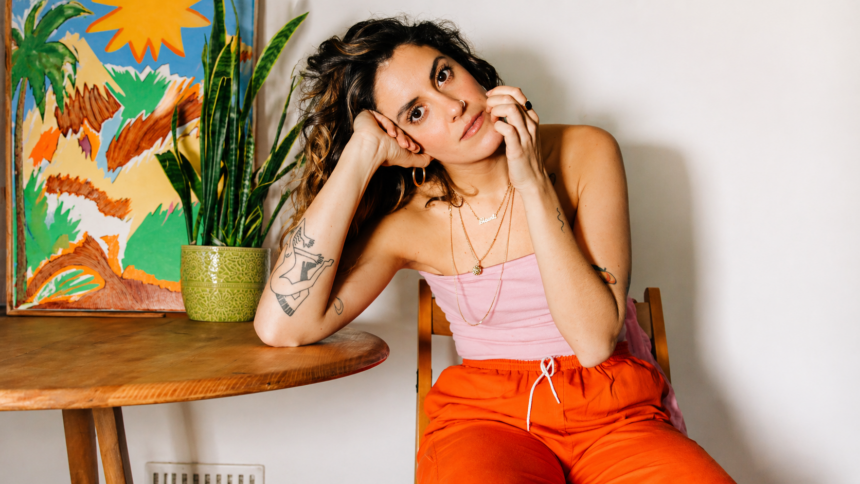
Shanti Celeste shares a free PDF resource on sober curiosity, ADHD, and alcohol for neurodivergent DJs and ravers in club culture
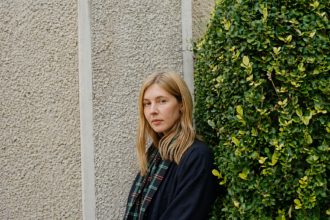
Shanti Celeste has done something the electronic music world rarely does: she made the private conversation public, and then handed it to everyone who needed it. On April 28, the Bristol-based Chilean DJ, producer, and Peach Discs co-founder shared a freely available PDF resource compiling books, podcasts, and guidance on navigating the relationship between alcohol, ADHD, and nightlife. It is a document born from community, put together after an Instagram call-out that flooded her inbox with responses. The document is now permanently available for anyone who wants it.
The starting point was a simple question Celeste posed to her Instagram network, asking for recommendations on the relationship between alcohol, ADHD, and club culture. The volume of what came back surprised even her.
I was overwhelmed by the messages I got back,” she wrote. “So many people feel the same way. I was sent amazing recos for things I hadn’t come across before, and so many people asked for me to share what I’d learned that I decided to do a PDF and post too, so it’s always there for anyone who wants it”
Speaking From the Inside
What gives this resource weight is that Celeste is not writing from the outside looking in. She is describing her own working life. Playing clubs two or three nights per weekend is her profession, which makes the standard advice that circulates around alcohol reduction almost entirely useless for her. “Most resources I’ve found don’t account for that,” she said plainly. “‘Avoid clubs’ isn’t really an option in this kind of work.” The specifics she shared are worth sitting with. Celeste described working through a reliance on alcohol to manage the social anxiety that comes with constantly being in loud, crowded environments.
She noted that having ADHD adds another dimension to that experience, and that medication has not been the right solution for her personally. She was also careful not to frame this as a total abstinence project. “I still want to enjoy a drink sometimes and the occasional silly roll through with my mates,” she wrote. “I’ve had some of my best, most inspiring experiences in those moments.” The nuance matters. This is not a sobriety manifesto. It is a resource for people trying to find a more conscious relationship with substances while remaining fully inside the culture they love. Celeste’s willingness to speak on this came through clearly in her motivation for sharing.
I’m sharing this because so many people feel this way, but don’t hear it spoken about in the world I operate in. You don’t need things to be ‘really bad’ to want something to change. I hope this finds someone who needs it”
A Scene Starting to Listen
The gesture lands inside a wider cultural shift that has been building across UK nightlife for several years. London party Club Soft, organized by DJ Mina, has built a loyal following around sober-curious events. Ministry of Sound’s Sober Rave series, hosted by DRIIA, has opened up the dancefloor to people who have traditionally felt excluded from it. Elsewhere, nights like Spectrum have explicitly centered neurodivergent community needs, with welfare-trained staff, decibel limits, and no strobe lighting. Celeste has been quietly building toward this kind of openness for some time. In her April 2025 DJ Mag cover story, written by Annie Parker ahead of the release of her acclaimed second album Romance on Peach Discs and Method 808 in May of that year, she spoke candidly about her emotional health and creative routines. Romance, which Resident Advisor praised for its emotional nuance and which was developed partly in collaboration with producer Batu and Austrian-Ethiopian harpist Miriam Adefris, confirmed Celeste as one of the most personal and considered voices in electronic music. This latest act of community care is entirely consistent with that. The PDF is available now.