
Sexyy Red’s new 18-track album leans heavy on trap nostalgia but loses the raw self-possession that made her breakthrough so undeniable
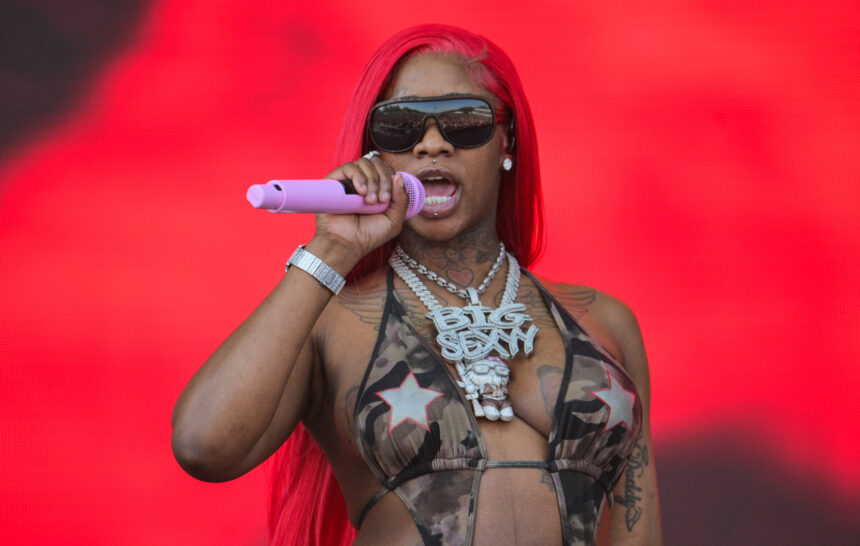
Sexyy Red dropped Yo Favorite Trappa Favorite Rappa on April 15, her birthday, via Rebel/gamma, and the timing felt intentional. The St. Louis rapper had just made her Coachella debut the weekend before, pulling out surprise appearances from Central Cee and Lizzo, and the 18-track project landed in the middle of the kind of cultural moment that should have made it hit harder than it does. Instead, what arrives is a record that leans so heavily on recreating the Southern rap that raised her that it rarely finds room to be the thing that made her famous in the first place: herself.
The problem is not the influences. Sexyy Red’s breakout tape, Hood Hottest Princess, was filled with homages to the Southern rap that shaped her. She interpolated T.I.’s trap anthem “24’s,” spit over Project Pat’s menacing “Cheese and Dope” beat, searched for the hoes over a sample of Silkk the Shocker’s “It Ain’t My Fault,” and proudly proclaimed herself the “female Gucci Mane.” She borrowed quite a few Trina and Boosie flows as well, but it never felt like she was kneeling at the altar of the canon. Her rowdy hooks and raunchy lyrics were firmly rooted in her experiences. The provocation of a line like “My coochie pink, my bootyhole brown” was secondary to the self-possession. Do you know the colors of your holes?
The Tape Format Has Its Moments
There are flashes of that same energy on Yo Favorite Trappa Favorite Rappa. The decision to bring in DJ Holiday as host throughout is a smart one, his drops and “Holiday season” tags pulling the whole project back to the early-2010s mixtape circuit Sexyy grew up listening to. When Tay Keith’s drums come in on “Cut Like Us (Blood Sustaz),” they land with the kind of weight that justifies the whole enterprise. Pretty Pinkk and Ghetto Beisha ride alongside without getting in her way, and the long intro does the work that most of the album is trying to do: establish that nobody in this circle needs anybody outside of it. “NDA” is another standout, Sexyy running legal language through a romantic filter in the way only she can. “This coochie require a NDA/I don’t care that you play for the NBA.” It sounds absurd. It also sounds completely natural coming from her, which is the trick. “Richer Than Alla My Opps” keeps the comparative flexing tight and specific, and “David Ruffin” lands its punchline without overexplaining it. The production roster across the album, including Metro Boomin, Zaytoven, ATL Jacob, and Mike WiLL Made-It, keeps things sonically credible throughout.
Where It Falls Apart
The album’s length is where it starts to lose the thread. At 18 tracks, Yo Favorite Trappa Favorite Rappa runs out of fresh ideas well before it runs out of songs. The hooks that should have stayed in the drafts accumulate in the back half. “Yop,” the Metro Boomin and Zaytoven closer, arrives wanting to be a victory lap and instead sounds like a tank running on empty. By the second verse, the “yop, yop, yop” repetition has long overstayed its welcome. The deeper issue is that Hood Hottest Princess succeeded because Sexyy’s personality was bigger than any reference point she pulled from. On Yo Favorite Trappa Favorite Rappa, the references start to feel like the point rather than the backdrop. When the recreations are 1-to-1 and the hooks read generic, the gap between Sexyy Red at her best and Sexyy Red on autopilot becomes impossible to ignore. This tape is not unlistenable. “Cut Like Us,” “NDA,” and “David Ruffin” alone are worth the runtime. But for an artist who made her name on being impossible to look away from, boring is the one thing she can least afford to be.