

Tomorrowland 2026 streams live July 17-19 and 24-26 from Boom, Belgium. Here’s the schedule, start times and where to watch every Mainstage set
The People of Tomorrow who couldn’t score a ticket still get a seat. Tomorrowland has released the official livestream schedule for its 21st edition, broadcasting live from De Schorre in Boom, Belgium across both weekends, July 17 to 19 and July 24 to 26. The stream kicks off at 2 p.m. CEST each day, which translates to 8 a.m. ET and a bleary-eyed 5 a.m. PT for American viewers, and it runs free of charge across Tomorrowland’s YouTube channel, official website, app, Instagram and TikTok.
One caveat for completists: only the Mainstage and Freedom Stage will be broadcast. With more than 500 artists spread across 16 stages, that means the livestream captures the spectacle but not the sprawl, so the CORE stage heads and hard techno devotees will be relying on fan-shot footage as usual.
A Mainstage Reborn From the Ashes
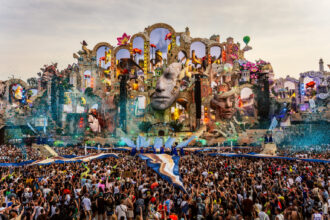
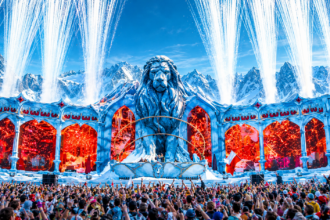
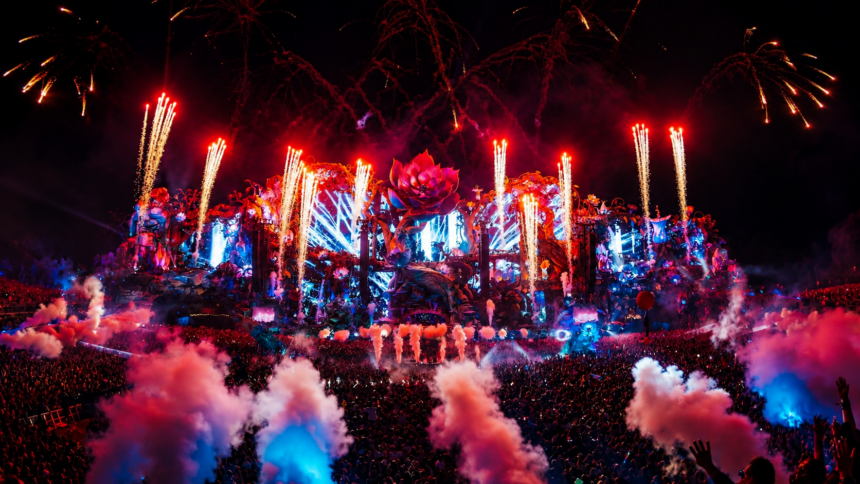
This year’s broadcast carries more weight than usual, because the stage itself is the story. The 2026 edition debuts the Consciencia theme, a psychospiritual concept built around primal human emotions, realized as a towering structure of giant statues with expressive human faces and ruin-like columns. It marks a genuine rebirth for the festival: last year’s mainstage burned to the ground less than two days before gates opened, forcing organizers to improvise a smaller stand-in structure in a scramble that became one of the most dramatic stories in festival history.
In a break from decades of tradition, Tomorrowland even previewed the new design on social media before the festival, a first for an organization that has always guarded its mainstage reveal like a state secret.
The talent scheduled to christen it is appropriately heavyweight. Calvin Harris makes his historic Mainstage debut, remarkably his first performance for the Tomorrowland brand since TomorrowWorld in 2013, joining David Guetta, Martin Garrix, FISHER, John Summit, Sara Landry, Indira Paganotto, NERVO and Max Styler across the two weekends. Hardwell, Armin van Buuren, Chase & Status and Dimitri Vegas & Like Mike round out a Mainstage bill that reads like a census of dance music’s arena class.
The Mystery Slot Everyone Is Talking About
Then there is the question mark. Shortly before set times dropped in June, Tomorrowland added a surprise Mainstage set to Weekend 1’s Sunday and refused to attach a name to it. No hint, no teaser, just an empty slot on the biggest stage in dance music, and the internet has spent the weeks since spiraling through every plausible and implausible candidate. Whoever it turns out to be, the reveal is engineered to become the viral moment of the festival’s opening weekend, and the livestream means the whole world finds out simultaneously.
The free global broadcast has quietly become one of Tomorrowland’s most powerful assets. The festival sells out its 400,000 tickets in minutes every year, but the stream is how it colonized the global imagination, turning Boom into dance music’s Mecca for millions who have never set foot in Belgium. In an era when Coachella’s YouTube numbers make headlines and EDC beams itself worldwide, Tomorrowland’s production values, the fireworks, the lore, the sheer scale of the Holy Grounds, remain the genre’s gold standard for televised spectacle.
Set your alarms accordingly. The full timetable for both weekends is live on Tomorrowland’s website, and if the Consciencia stage delivers on its teasers, the 2 p.m. CEST start time will be worth every lost hour of sleep.