


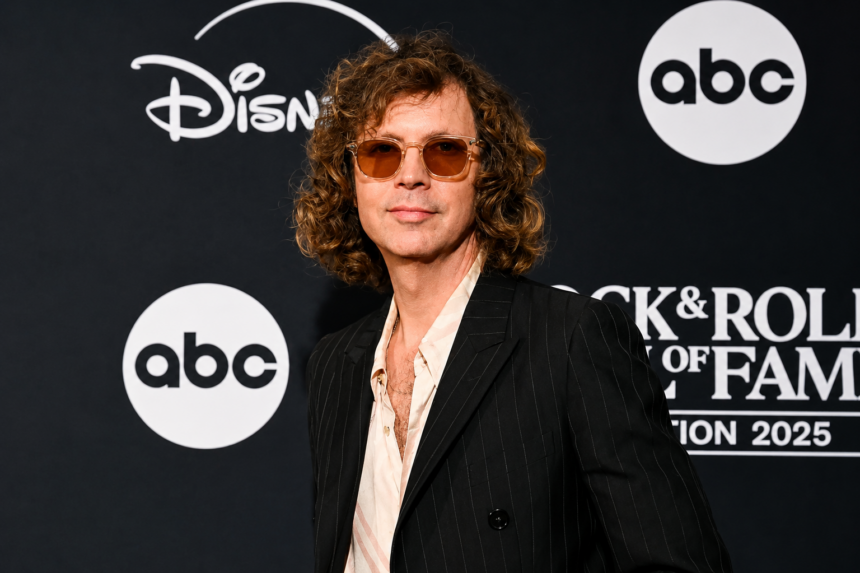
Beck announces ‘Ride Lonesome,’ out Sept. 18, reuniting his ‘Sea Change’ band and Nigel Godrich, and shares the haunting new single ‘In the Night’
Beck‘s quietest records have always been his heaviest, and he knows it. On Wednesday (July 15), the shape-shifting songwriter announced ‘Ride Lonesome‘, his first album of new material since 2019’s Grammy-winning ‘Hyperspace’, due September 18 via Capitol Records. The stakes are written into the personnel: Beck has reassembled the band behind ‘Sea Change’, ‘Morning Phase’ and ‘Mutations’, the three albums that form the melancholy spine of his catalog, and brought Nigel Godrich back to mix. This is not a detour into his folk mode. It is a homecoming to it.
The announcement arrived with a second single, ‘In the Night’, a ghostly, finger-picked ballad draped in swaying strings and subtle horns, accompanied by a cinematic video directed by Mikai Karl and starring the great French actor Denis Lavant, the weathered face of Leos Carax’s filmography. The song follows April’s contemplative title track, which Beck expanded in June with a duet version featuring country phenom Sierra Ferrell. Together, the two previews sketch an album of hushed, haunted Americana, closer to the desert-noir loneliness its Budd Boetticher-borrowed title implies than to anything on ‘Hyperspace’.
Getting the Band Back Together
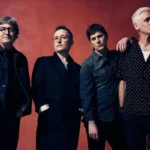
The reunion is the story. Smokey Hormel, Joey Waronker, Justin Meldal-Johnsen, Roger Joseph Manning Jr. and Jason Falkner convened with Beck in Room B at United Studios in Hollywood, the same core unit that gave ‘Sea Change’ its bruised grandeur in 2002 and ‘Morning Phase’ its Album of the Year Grammy in 2015. A decade after those ‘Morning Phase’ sessions, Beck described the chemistry as deeper than ever, saying the group ended up “finding new sounds and emotional textures along the way” even while revisiting familiar musical territory.
That framing matters. ‘Sea Change’ and ‘Morning Phase’ are the rare sequel pair in rock where the echo enhanced rather than diluted, and ‘Ride Lonesome’ now positions itself as the third panel of a triptych, made by musicians who have spent twenty-plus years learning each other’s silences. Godrich’s involvement, his first full mixing job for Beck since that era, suggests the sonics will be similarly widescreen: dry, close vocals inside cavernous, meticulous space.
Seven Years, Fully Accounted For
The long gap was not idle time. Beck told NPR that after the pandemic stalled his momentum, the songs kept coming anyway, saying “it’s been a very prolific time for me” and revealing he built his own recording studio in the interim. He also cleared the vault in February with ‘Everybody’s Gotta Learn Sometime’, a collection of rarities, deep cuts and covers that now reads as a palate cleanser before the main course.
The 12-song tracklist opens with the title track and winds through evocatively terse titles like ‘Failed Words,’ ‘Slow Canyon,’ ‘It Ends Right Here’ and closer ‘Beyond the Light.’ Beck will take the record straight to the stage, launching the Ride Lonesome North American tour September 16 at Vancouver’s Queen Elizabeth Theatre, two days before release, and running through an October 31 date at The Truth in Nashville.
There is a reason this announcement lands differently than a typical legacy-act album cycle. The confessional, acoustic Beck is the version that has aged best, the one younger songwriters from Phoebe Bridgers’ orbit to the ambient-country underground keep citing. At a moment when Americana‘s saddest textures are back at the center of the conversation, the man who helped define modern loneliness-as-sound is returning with the exact collaborators who built it. Whether ‘Ride Lonesome’ reaches the heights of ‘Sea Change’ is September’s question. That he is finally asking it again is news enough.