

Miranda Lambert’s 10th album ‘Crisco’ revives late-’70s country disco with lush strings, Ella Langley and Chris Stapleton. Our Review
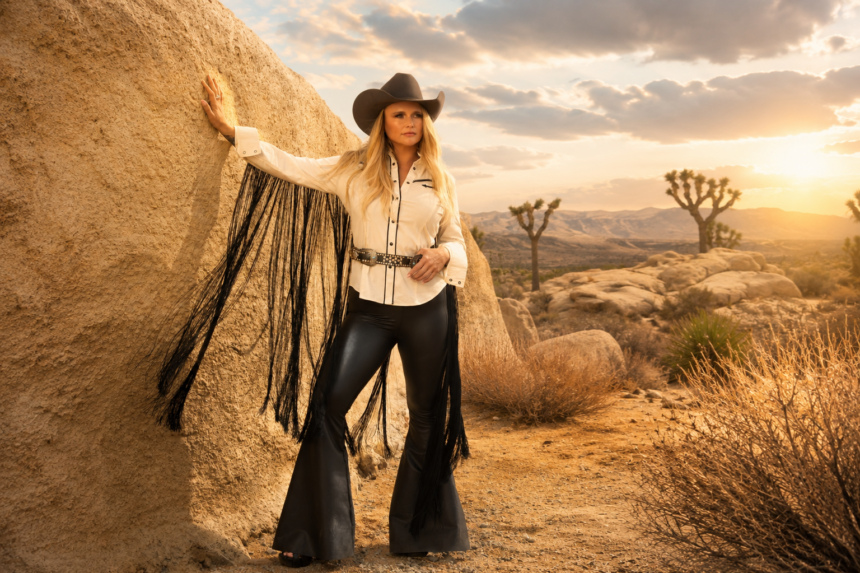
Country music has flirted with the disco ball before. In the late 1970s, as Nashville chased crossover dollars, stars like Dolly Parton put a four-on-the-floor pulse under their twang and dared purists to complain. Miranda Lambert, Texas’s most reliable firebrand, steps into that lineage on ‘Crisco‘, her 10th solo studio album, out today via MCA Nashville. The result is a slick, sunny and frequently charming record that proves she can glide, even if it rarely asks her to bleed.
‘Crisco’ is her first album since 2024’s ‘Postcards from Texas’, and it veers away from the dusty introspection of ‘The Marfa Tapes’ and the road-trip sprawl of ‘Palomino’. It also lands at a strange, flattering moment for Lambert the songwriter. Days before its release, ‘Choosin’ Texas’, the Ella Langley hit Lambert co-wrote, logged a record-breaking 24th week at No. 1 on the Hot 100. Her pen has rarely carried more weight, which makes this album’s lightness feel like a deliberate choice.
The Glitter and the Grease
The title track is the thesis. Written by five people, Lambert alongside Jesse Frasure, Kris Wilkinson, Chill Fellacheck and Aaron Raitiere, it celebrates the slippery union of honky-tonk and nightclub that guides much of the record. When it arrived as a single in May, Saving Country Music dismissed it as “empty calories,” and that criticism is not entirely unfair. The lyric is more slogan than story. But as a mission statement, it does its job: it tells you to stop overthinking and move.
The production is where ‘Crisco’ earns its keep. It recreates late-’70s country disco with real affection, and clever string arrangements give the grooves a lift that keeps them from sliding into pastiche. Elsewhere, Lambert reminds you that she never stopped writing heartbreak. ‘Cowgirl Curtsy’ is a classic tear-in-your-beer lament about loving someone who keeps hurting you, while ‘Till The Going’s Gone’ carries a nervous, escapist energy that suits its restless writing.
Duets and Disciples
Two guests sharpen the album’s stakes. The first is Langley, whose rise Lambert has nurtured closely; Lambert co-produced Langley’s second album, ‘Dandelion‘. Their duet plays like a passing of the torch that neither woman is in a hurry to complete, with mentor and protégé trading energy as equals. It is also the album’s clearest link to the songwriting run that has made Lambert one of Nashville’s most important behind-the-scenes figures this year.
The second is Chris Stapleton, who joins Lambert on ‘A Song to Sing’, a call-and-response love song about building something together. His grit rubs against her smoother delivery, and the contrast is the most purely musical thrill on the record, a reminder of how much tension a good duet can carry.
Comfort, With a Cost
More than two decades into her career, Lambert sounds at ease, and that ease is both the album’s charm and its limit. RIFF heard a record that is simply fun, and it is. Yet the volatility that made ‘Crazy Ex-Girlfriend’ feel dangerous is mostly absent here, smoothed into grooves designed to keep the room dancing rather than to unsettle it.
Country has rediscovered the dancefloor in recent years, and ‘Crisco’ could easily be mistaken for a trend play. It is better than that. Lambert treats disco as a genuine tradition, not a costume, and the craft is undeniable. What it lacks is the sense of risk that defined her best work. ‘Crisco’ is a pleasure to spend time with. It is rarely a revelation.