



Teenage Fanclub announce 13th album ‘Do Not Dare To Dream,’ out October 9 via Merge, and share lead single ‘Day In The Sun’
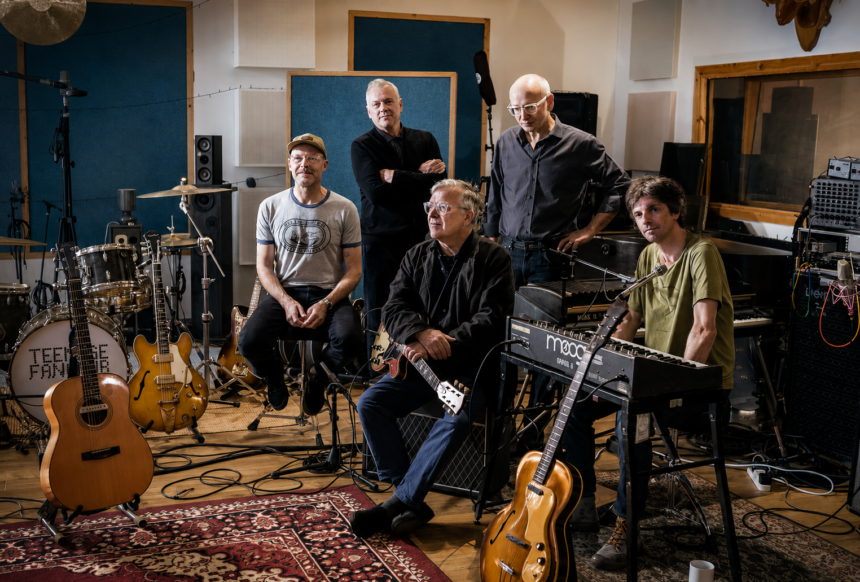
Thirty-seven years into a career built on chiming guitars and unshowy melancholy, Teenage Fanclub have named their new album after a joke about hope. Do Not Dare To Dream, the Scottish band’s thirteenth studio record, arrives October 9 via Merge Records, and it comes with lead single “Day In The Sun” and a video shot on the remote Hebridean island where the whole thing was made. It follows 2023’s Nothing Lasts Forever, and it finds Norman Blake and Raymond McGinley, joined by longtime members Euros Childs, Francis Macdonald, and David McGowan, in the same register they have quietly perfected: cheerful and devastated at once.
The title comes from Blake’s own song “I Do Not Dare To Dream,” and his explanation is characteristically dry. “Those ‘dare to dream’ sentiments are kind of ridiculous,” he said. “I don’t think the world works that way.” He has described the phrase as a jab at the motivational memes that circulate endlessly online.
McGinley frames the flip side: “We can still be cheerful and optimistic in the face of things not being great.” That tension, taking honest stock of a fraught world without collapsing into despair, is the record’s operating principle. McGinley was also blunt about the naming process itself:
It’s difficult when it comes to coming up with a name for an album. Especially after you’ve made twelve of them”
A Church Organ on a Remote Island
The setting shaped the sound. Teenage Fanclub have long made a practice of recording each album somewhere new and using whatever gear they find there, and Do Not Dare To Dream took shape across roughly fourteen days at Black Bay Studio in Kirkibost, on Great Bernera in the Outer Hebrides. It is the most remote place they have ever recorded, and being surrounded by crashing sea and ancient ruins focused them.
What they found in the room was a Domus church organ, prominent across the record and especially on “Over And Over,” plus a bank of synthesizers that Childs put to work. His keys give the album much of its color, from a 1970s Solina String Ensemble on “Tomorrow People” to Mellotron flutes on McGinley’s reflective “Take Time.”
McGinley put the location in perspective. “It’s been a while since we started doing this thing we do, but to us it feels like no time at all,” he said. “In the place where we made the record people would have been singing thousands of years ago. Life is short, but music is eternal.”
The Byrds, Still, and Always
“Day In The Sun” is trademark Fanclub: a warm, organ-washed midtempo ballad that opens on harp and carries a subtle vocal wah in the background, all of it glowing with the Californian psych sheen that has hovered over the band since Bandwagonesque. The Byrds comparison is unavoidable and entirely earned. Lyrically it belongs to the album’s larger argument about finding renewed purpose by opening up rather than shutting down. Donald Milne directed the video at Black Bay itself.
The tracklist runs “There Was You,” “Tomorrow People,” “Over and Over,” “Be With You Tonight,” “The Same Air,” “I Do Not Dare To Dream,” “Take Time,” “Day In The Sun,” “Somewhere To Land,” and “Young And Wise.”
The band tours internationally from September through November, with a substantial UK run that includes two nights at St Luke’s in Glasgow and a sold-out show at Hackney Church in London, plus European dates including four German shows in late October. Blake has stayed busy elsewhere too, releasing Murmurs earlier this year with a supergroup featuring ex-Suede guitarist Bernard Butler and James Grant. More than two decades independent and thirteen albums deep, Teenage Fanclub keep making the same case: that modest, well-built songs outlast almost everything louder.