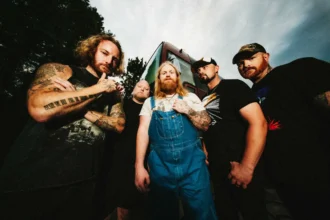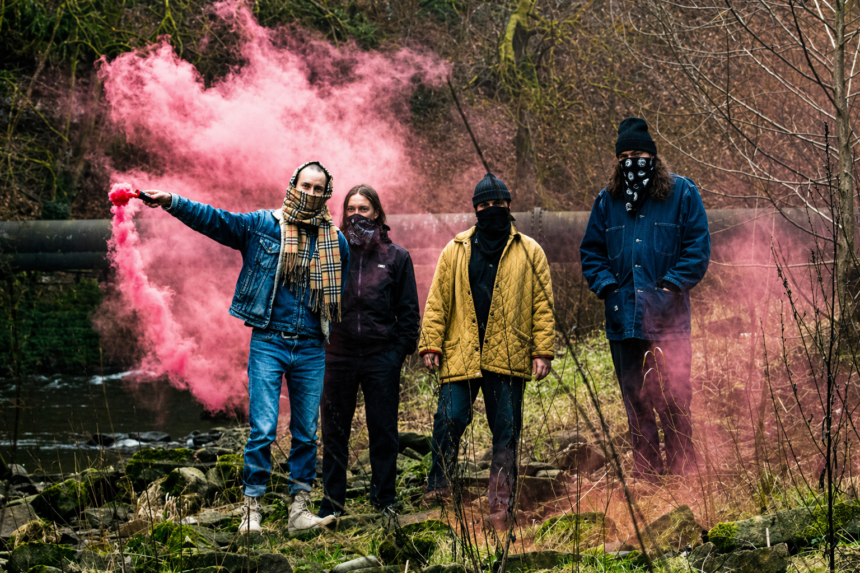
Wu Lyf announce a 2026 UK and European tour behind their acclaimed comeback album. Tickets on sale April 24 at 11:11am BST
Fifteen years of silence earned the right to take up space. Wu Lyf, the Manchester band whose debut album Go Tell Fire To The Mountain arrived in 2011 trailing clouds of reverb, cryptic manifestos, and a Pitchfork Best New Music distinction, have announced their most extensive run of live shows since reforming. The tour, set for autumn 2026, supports A Wave That Will Never Break, their long-awaited second album, released April 10, and which critics have widely described as a record that earns its ambitions more fully than anything the band produced in their first chapter.
The run kicks off September 15 at Dublin’s Button Factory before heading to London’s Islington Assembly Hall on September 17 and Brighton’s Patterns the following night. From there, Wu Lyf move across Europe, hitting Lille, Cologne, Berlin, Oslo, Stockholm, Copenhagen, Prague, Zurich, Lyon, Antwerp, Paris, and Amsterdam through the end of September and into October. A final date is pencilled in for October 4, with the city and venue still to be confirmed. A homecoming show at Manchester’s Albert Hall on June 13, previously announced, anchors the UK run. Tickets for the new dates go on general sale this Friday (April 24) at 11:11am BST, with pre-sale access available ahead of artist and venue pre-sales running throughout the week.
A Hidden Track, an NFC Chip, and a 15-Year-Old Recording
Alongside the tour announcement, Wu Lyf have shared “Triumph,” a track with a history as unusual as the band itself. The song was originally the final recording the group made before dissolving in 2012, and it surfaced briefly via YouTube before disappearing along with the band. Its re-emergence came not through a press release but through a fan who discovered it via an NFC chip embedded in the vinyl edition of A Wave That Will Never Break, a detail that is entirely consistent with the band’s instinct to route access to their work through unconventional means. The album itself is not on streaming platforms, available instead through the band’s own L Y F membership club at four pounds per month, a subscription that also grants access to demos, a forum, and other materials.
The critical response to A Wave That Will Never Break has been strong. Stereogum named it Album of the Week, noting that vocalist Ellery Roberts’ unkempt delivery now “doesn’t feel like a sales pitch anymore.” SPIN called it “earnest and electrifying.” The Skinny described the album as “revelatory in its clarity and sincerity,” pointing to the 10-minute centrepiece “Tib St. Tabernacle” as a highpoint produced by indie veteran Sonic Boom, a choice that gave the record a spacious, deliberately unhurried quality the band’s debut rarely allowed.
What the Band Has Said About Coming Back
Speaking to NME this month, the band offered a clear-eyed account of how the reunion came together, with none of the theatrical opacity that once defined their public communications. “It was more the idea that playing together for the first time sounded good than anything else, then it all grew from there,” said Tom McClung.
I don’t think anyone sits down with a masterplan before they start. We want to build something from this foundation that we find quite solid and interesting”
Ellery Roberts was similarly direct about the band’s relationship to expectation and external narrative. “Even though media publications have constructed some kind of sense of marketing masterplans with everything we’ve done in the past, my relationship with it is just that we’ve made intuitive decisions based on what feels true and right in the moment,” he said. “An alternative is possible, and you only know that by trying it.” In 2026, with streaming bypassed, tickets going on sale at 11:11am, and hidden tracks surfacing via vinyl chips, Wu Lyf are still doing it their way. The difference now is that the music appears fully ready to hold the weight of the mythology.