


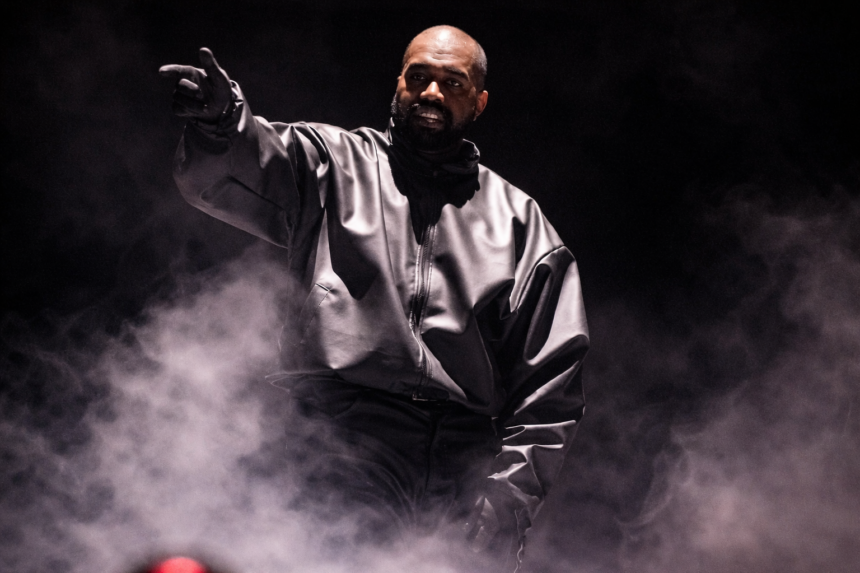
Festival Republic boss Melvin Benn defended Ye’s Wireless booking hours before the UK Home Office banned him, cancelling the entire festival
Melvin Benn stood by Kanye West until the very end. Then the UK government stepped in.
Less than 24 hours before the UK Home Office revoked Ye’s Electronic Travel Authorisation and erased Wireless Festival 2026 from existence, the man responsible for booking him was still making the case for forgiveness. Festival Republic Managing Director Melvin Benn issued a detailed personal statement on April 6 defending Ye’s right to headline all three nights at London’s Finsbury Park this July. By April 7, the government had made the decision Benn refused to make himself, and one of the UK’s biggest urban music festivals was cancelled outright.
The sequence of events is a portrait of institutional nerve held long past the point of logic, and it ended in the worst possible outcome for everyone involved: ticket holders left scrambling for refunds, sponsors already gone, and a festival with over two decades of history wiped from the summer calendar in a single government ruling.
A Personal Statement That Raised More Questions Than It Answered
Benn’s statement was, by any measure, an unusual document. He opened by establishing his own moral credentials: a self-described “deeply committed anti-fascist” who lived on a kibbutz in the 1970s that was attacked on October 7th, and who described himself as “pro Jew and the Jewish state, while being equally committed to a Palestinian state.” He then pivoted to personal experience with mental illness to frame his capacity for forgiveness, before acknowledging that what Ye had said about Jews and Hitler was “as abhorrent to me as it is to the Jewish community.”
Despite all of that, Benn’s conclusion was to stand firm. His reasoning rested on a media rights argument: Ye’s music was already playing on commercial radio, already streaming on UK platforms, already consumed by millions without political interference. Benn’s position was that Wireless was not offering Ye a platform for ideology but for performance, and that the artist had “a legal right to come into the country and to perform.”
“Forgiveness and giving people a second chance are becoming a lost virtue in this ever-increasing divisive world,” Benn wrote, in what reads now as a closing argument that arrived too late and persuaded no one with the power to act”
The statement drew immediate criticism from across the political spectrum. Prime Minister Keir Starmer had already described the Wireless booking as “deeply concerning.” Health Secretary Wes Streeting publicly challenged the suggestion that Ye’s bipolar I diagnosis explained or justified a song called “Heil Hitler.” The Board of Deputies of British Jews said they were willing to meet Ye, but only after he agreed not to perform at Wireless this year. Sponsors including Pepsi, Diageo, and PayPal had already withdrawn, taking commercial scaffolding with them before the government ever intervened.
What the Home Office Did in One Day
On April 7, the Home Office moved. Ye had applied for an Electronic Travel Authorisation, the standard visa mechanism for international travellers entering the UK. The application was rejected on the grounds that his presence would “not be conducive to the public good,” the same language used to deny his entry to Australia the previous year.
Festival Republic issued a statement shortly after: “The Home Office has withdrawn Ye’s ETA, denying him entry into the United Kingdom. As a result, Wireless Festival is cancelled and refunds will be issued to all ticket holders.”
The Campaign Against Antisemitism did not take long to respond. “For once, when it said that antisemitism has no place in the UK, it backed up its words with action,” the organisation wrote. “Wireless Festival, in its desperate quest for profit, defended the invitation until the end. That is shameful.”
Ye himself had issued a statement that morning, saying his “only goal is to come to London and present a show of change, bringing unity, peace and love through my music.” He expressed a willingness to meet UK Jewish community leaders. It was not enough. Earlier this year, he had taken out a full-page ad in The Wall Street Journal apologising for his past antisemitic statements, attributing them to the effects of his bipolar I diagnosis. That apology came ahead of his latest album, Bully, and a run of high-profile concerts, Wireless among them. The apology tour had not moved the needle on government policy.
What is left, the morning after, is a Finsbury Park site that will sit quiet in July, a festival organisation that will spend the coming months evaluating what went wrong, and a Managing Director whose statement about forgiveness now reads as the last public record of a decision that could not be walked back. Benn was not wrong that redemption is a value worth preserving. He was wrong to think that value could absorb the weight of what Ye has actually done, which includes, as recently as 2025, releasing a song called “Heil Hitler,” selling swastika-emblazoned merchandise, and boasting publicly about the money he made doing it.
The music industry has cycled through this debate before. It will cycle through it again. But for now, Wireless is gone, and the argument Benn made will be remembered as the statement a festival boss issued the day before his festival ceased to exist.