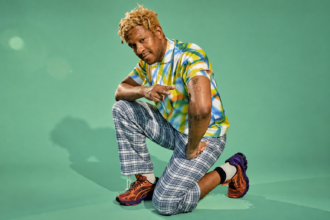



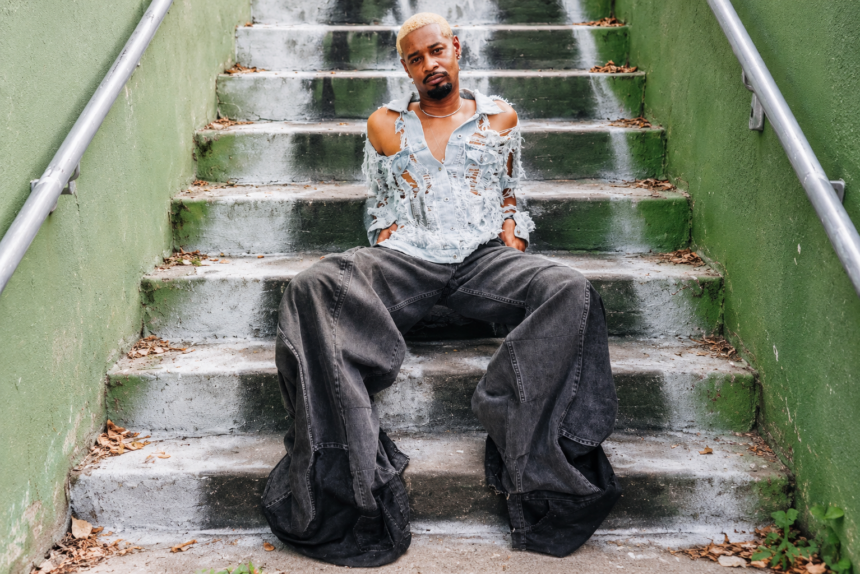
Danny Brown will play ‘Atrocity Exhibition’ front-to-back at four US shows and reissue the 2016 album with unreleased instrumentals
Atrocity Exhibition never sounded like a record designed to be performed in sequence. It lurches, it doubles back, it drops out of rhythm mid-thought. Ten years after its release, Danny Brown is doing it anyway. The rapper announced Tuesday (Sept. 22) that he will play his 2016 Warp album front-to-back at four US shows this fall, the first time he has performed any album in his catalog straight through. Tickets go on sale Thursday (Sept. 24) at 10 a.m. local time.
The run opens Nov. 7 at Catch One in Los Angeles, hits Outset in Chicago on Nov. 13 and Irving Plaza in New York on Nov. 19, then closes Dec. 3 at Mohawk in Austin, the city the Detroit native now calls home. “10 YEARS!? AINTITFUNNYHOWITHAPPENED WHOEVERWOULDIMAGINE???” he wrote in the announcement post.
The Record That Rewrote the Rules
The anniversary lands this week. Atrocity Exhibition arrived Sept. 27, 2016, via Warp and Fool’s Gold, and it remains the pivot point of Brown’s career. Paul White handled the bulk of the production, with contributions from Evian Christ, Black Milk, the Alchemist, Petite Noir and Playa Haze, pulling source material from krautrock, radiophonic experiments and industrial techno into something that sounded less like rap production than controlled demolition.
Brown borrowed the title from a Joy Division song, which took it in turn from J.G. Ballard‘s 1970 novel, and the lineage was not decorative. This was an album about addiction and paranoia that refused to make either legible or comfortable. “Really Doe” brought Kendrick Lamar, Ab-Soul and Earl Sweatshirt onto a beat that gave none of them a safe pocket. B-Real and Kelela turned up elsewhere. Through it all, Brown’s yelp cut across the arrangements rather than riding them.
A decade on, its influence is everywhere in the rap underground, in the assumption that a rap record can be abrasive, electronic and structurally hostile and still find an audience. That case was not settled in 2016. Atrocity Exhibition helped settle it.
A Reissue That Shows Its Work
The physical editions arrive Nov. 13 as one-time pressings. Ed Davis, who designed the original sleeve around Timothy Saccenti’s circuit-bent portrait, has created alternate artwork, and the limited colored double vinyl comes housed in mirrored silver board with printed inner sleeves and an eight-page 12-inch booklet.
The more interesting item is the CD. It ships with a bonus disc collecting previously unreleased instrumental versions of every track on the album, and those instrumentals will hit streaming services for the first time. The instrumental of “Ain’t It Funny” is already up as a preview.
That last detail is the real archival event. Stripped of Brown’s voice, White’s arrangements stop functioning as beats and start functioning as compositions, and the album’s queasy seams become visible. Anniversary reissues usually sell nostalgia. This one offers a schematic.
The timing also connects to where Brown is now. His most recent album, 2025’s Stardust, found him working with a younger cohort from the electronic and alt-pop underground, including underscores on “Copycats,” whose video put the two in a limousine crossing Brooklyn. “Ain’t It Funny” has been picking up new listeners on that tour, a decade-old track landing with an audience that arrived through glitch-pop rather than Detroit rap.
Four shows is a small gesture for an album this consequential. Then again, Atrocity Exhibition was never built to scale. Playing it in order once, in four rooms, may be exactly the right size.