



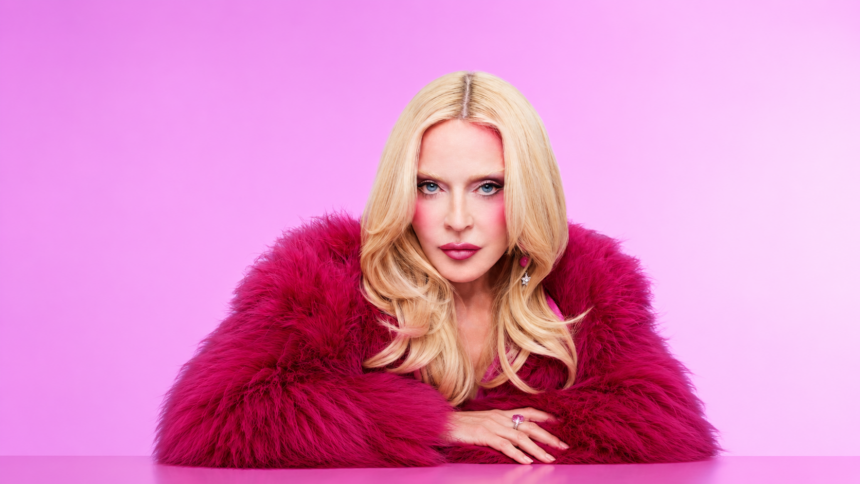
Madonna’s Confessions II is out July 3 via Warner Records. Stream all 16 tracks now, featuring Sabrina Carpenter, Feid, Martin Garrix, Stromae and Lola Leon
Madonna‘s Confessions II is out now. The Queen of Pop’s 15th studio album arrived July 3, 2026 via Warner Records, 21 years after the original Confessions on a Dance Floor set a standard for what a Madonna album could do commercially and culturally. The 16-track project is produced throughout by Stuart Price, the same architect behind the 2005 original, and it arrives as a modern take on club music that simultaneously evokes the genre’s previous eras without falling into pastiche. Features include Sabrina Carpenter, Feid, Martin Garrix, Stromae, and Madonna’s own daughter Lola Leon.
The album opens with “I Feel So Free,” the lead single that arrived in April and announced the campaign across Digital Song Sales, Hot Dance/Pop Songs, and Dance/Mix Show Airplay, reaching Number 1 on Dance Digital Song Sales. “Love Sensation” and “Bring Your Love” with Sabrina Carpenter followed as additional previews of the album’s sonic ambition: lush, cerebral productions built around the concept of the club as church and dancing as spiritual work.
The Collaborations and What Each One Adds
The guest list on Confessions II is not decorative. Each collaboration is doing something specific to the album’s emotional and sonic architecture. “Bring Your Love” with Sabrina Carpenter appeared at Coachella earlier this year when Madonna joined Carpenter during the latter’s headlining set, giving the track a live premiere before the album existed in any formal sense.
“My Sins Are My Savior” with Belgian star Stromae sits in more reflective territory, Stromae’s existential melancholy providing counterweight to the euphoria of the album’s dance floor material. “Read My Lips” with Colombian reggaeton star Feid arrived as the FIFA World Cup bonus track in late June and added a bilingual, Latin crossover dimension to the campaign. Martin Garrix appears on the aptly titled “Bizarre,” and his DJ and production background gives that track an arena-scale drop sensibility that connects the album’s dance floor ambitions to the contemporary festival circuit.
“The Test,” the duet with Lola Leon, closes the album before its final track and operates on entirely different terrain from everything surrounding it. Pitchfork called it “a bracing, heartbreaking moment.” Billboard described it as “the album’s most interesting and delicately powerful songs” that “sounds like they’re simultaneously confessing to and comforting each other.” Leon approached Madonna about writing the song as a way to heal their relationship, and Madonna has said that conversation solidified the idea that now was the right time to make this record.
The Critical Context and the 21-Year Wait
Confessions II arrives carrying the weight of comparison to one of the most unanimously acclaimed albums of Madonna’s career. Confessions on a Dance Floor holds a Metacritic score of 81 and was certified triple platinum in the UK and double platinum in the US. The 21-year gap between the two records is both a commercial opportunity and a critical liability: anything short of matching that record’s impact will be read as a shortfall rather than a separate achievement.
The early critical response has been divided in exactly the ways a polarizing album divides. Billboard’s own track ranking placed “The Test” and “Bring Your Love” among the album’s standouts while noting the project’s overall coherence as a piece of dance floor programming. Confessions II is available to stream now on all platforms. The Club Confessions world tour, which has already been announced with dates across North America and Europe, begins later in 2026.