




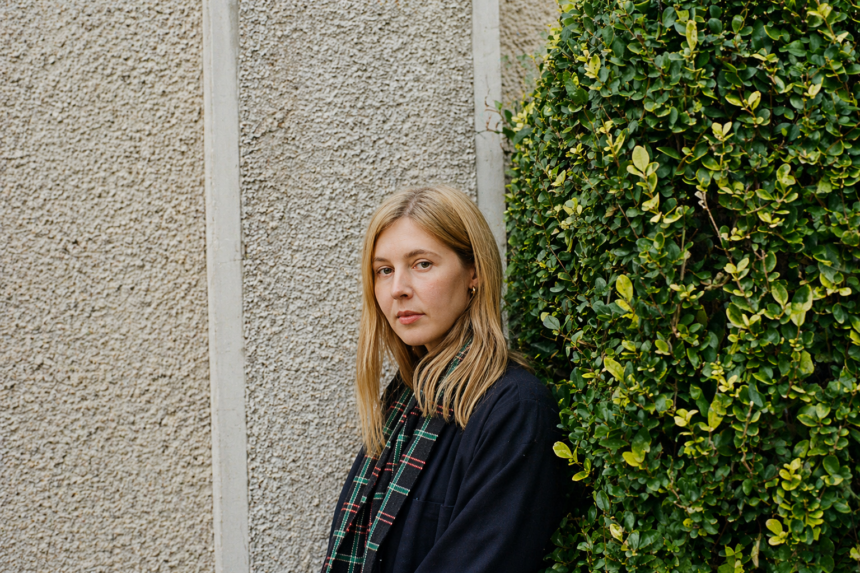
Carla dal Forno’s fourth album ‘Confession’ pairs jangly post-punk pop with a narrator consumed by obsession. Out April 24 via Kallista Records
There is a specific kind of unease that comes from music that sounds pleasant while saying something alarming. Carla dal Forno has made a career edging toward that territory, but on ‘Confession‘, her fourth album, she arrives there fully. Released April 24 via her own Kallista Records imprint, it is her most exposed and emotionally direct record to date, and also, quietly, her most unsettling.
Dal Forno recorded ‘Confession’ in a studio inside a partially decommissioned hospital in Castlemaine, a bushland town of fewer than 8,000 people in regional Victoria, Australia. She moved there after years spent in the world’s music capitals, and her third album, ‘Come Around’ (2022), documented the adjustment. Where that record had hooks and a sense of release, ‘Confession’ withholds. The building’s emptied corridors and long-hollowed rooms give the album its particular atmosphere: a stillness that amplifies interior noise rather than dampening it.
The Sound of Obsession, Worn Lightly
The production is dub-inflected, minimal, and deceptively jaunty. Melodic basslines anchor jangly guitar work while synths materialize and dissolve without announcing themselves. The rhythms are fractured and careful. Dal Forno’s voice sits closer in the mix than on any previous record, less draped in reverb, more plainly present. The album opens mid-thought on ‘Going Out‘, with the line “I have these thoughts that don’t end,” and the instrumentation stays out of the way while she presses forward: “You will belong to me soon. There’s no other way.” It is a brisk, almost pop-adjacent way to introduce a narrator operating well outside reason. “This wasn’t the album I intended to make,” dal Forno has said. “At the heart of the album is a friendship that became emotionally charged in an unexpected way. That shift brought daydreaming, jealousy, tenderness, confusion, self-awareness and eventually acceptance.” The songs trace that arc without tidying it. On ‘Nighttime‘, dub-tinged and nocturnal, desire loosens its grip on reality. On ‘Under the Covers‘, a song about domestic routine, the melody barely moves and the vocals arrive in short breathy phrases, recalling the lo-fi Australian lineage of The Cannanes and Garbage and the Flowers. ‘Gave You Up’ strips back further to a near-acoustic setting, drawing Grouper-like comparisons in its emptiness.
A Record That Gets Closer With Every Listen
The wordless interludes threaded throughout, ‘Drip Drop‘, ‘On the Ward‘, ‘Staying In‘, function less as filler than as weather changes. Dal Forno has described them as “little pockets of space where the story breathes without words,” and they do exactly that, particularly ‘On the Ward’, where a dub bassline moves through the hospital’s specific brand of silence. The album closes with rain falling against a reverberant piano, an imitation of closure that does not quite convince, which is precisely the point. Dal Forno’s earlier work kept the camera at a remove. The distance was seductive on ‘You Know What It’s Like‘ (2016) and remained a structural device through the records that followed. ‘Confession’ removes it entirely. The result is her most uncomfortable and most rewarding record, a portrait of a person watching themselves lose perspective and choosing to document it plainly rather than aestheticize their way out of it.