

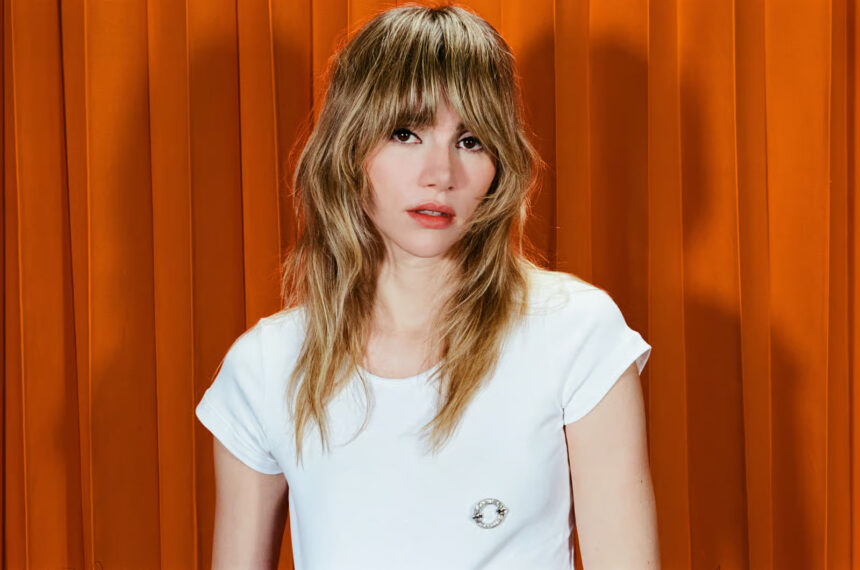
Suki Waterhouse drops new single ‘When I Get Drunk (I Want You Boy)’ with a fever dream video ahead of her Island Records album Loveland, out July 10
Suki Waterhouse released “When I Get Drunk (I Want You Boy)“ on June 12, 2026, and it is the most viscerally immediate thing she has shared from her upcoming third album. Out July 10 via Island Records, Loveland is a 14-track project co-written with collaborators including Aaron Dessner, Joel Little, Amy Allen, and Dan Wilson, and it marks Waterhouse’s first album since signing to Island after her first two records, I Can’t Let Go in 2022 and Memoir of a Sparklemuffin in 2024, both came out on Sub Pop. The new single makes the case for the move clearly: this is a bigger, more confident sound than anything she has made before.
The song sits at track six on the Loveland tracklist, positioned precisely between “Teardrops” and “Jukebox,” and it does exactly what a sixth track should do. It arrives with enough momentum built from what came before to let it run full tilt. Waterhouse has been specific about what “When I Get Drunk (I Want You Boy)” is and is not. “For me, it’s an ode to an intoxicating kind of love and that feeling of chasing a thrill,” she said in a statement, “and the more you listen to it, the more it pulls you into its spell.” That last line is not a metaphor. The track earns it.
The Video and the Board Game
The accompanying video, co-directed by Waterhouse and Tyler Weinberger and filmed inside her home, is described as a stylised drunken fever dream. It has the domestic-turned-cinematic quality that has made Waterhouse’s visual work recognizable. She is not performing distance from the material. She is in it, and the home setting makes that intimacy literal.
The more unusual piece of Loveland’s rollout is the vinyl gatefold. It doubles as a playable board game titled “Game of Loveland,” designed to guide players through prompts and conversations inspired by the album’s themes of love, longing, and starting over. It is a physical object built to extend what the music does into social experience, and it fits the album’s conceptual framing exactly. “Writing Loveland was me trying to find myself again,” Waterhouse wrote when announcing the project. “The emotions of it all felt like a rollercoaster. A game of winning, losing, longing, choosing, starting over. So inside the vinyl, I made one.”
What Loveland Is Actually About
Waterhouse has described Loveland as her most personal record, shaped by the distance between a former self who lived for romance and momentum and a present self reaching for something quieter and more lasting. Motherhood sits at the center of that shift. She and Robert Pattinson welcomed a daughter in late 2024, and the experience of becoming someone new while still carrying the shape of who you were before runs through the album’s 14 tracks. Lead single “Back in Love” drew praise from Harper’s Bazaar and NYLON on release. “Tiny Raisin” followed. “When I Get Drunk (I Want You Boy)” is the third preview, and it is the most immediate of the three.
The Loveland Tour follows the album’s release, with dates including Radio City Music Hall in New York, Hollywood Forever Cemetery in Los Angeles, and festival slots at Lollapalooza and Austin City Limits. Waterhouse previously opened for Taylor Swift during the Eras Tour and has built her own headline draw steadily since. Loveland is the record where that trajectory finds its clearest expression yet.