




Helsinki’s Krumbukten debuts with ‘My Heart May Slumber,’ the lone vocal track from Niklas Finnäs’ mostly instrumental album ‘Behind The Glass’
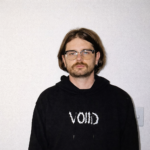
Drummers know how to wait. They sit at the back, hold the time, and let everyone else take the spotlight. Niklas Finnäs has been waiting since 2019, quietly sketching the ideas that would eventually become Krumbukten. This fall, the waiting stopped. ‘My Heart May Slumber,’ the Helsinki project’s debut single, arrived on October 13, and it has spent the weeks since gathering the kind of praise most first releases never touch.
The notices came fast. It’s All Indie called it “nothing short of spectacular.” Illustrate Magazine heard something “spellbinding.” Plastic Magazine described a track that stays immersive and timeless from the first bar to the last. None of that was guaranteed. On the day it came out, Krumbukten had zero monthly listeners on Spotify. A month later, the conversation around it suggests a project that arrived more fully formed than its newcomer status lets on.
A Long Road to the First Note
Finnäs grew up in a Swedish-speaking community on Finland’s west coast, part of the country’s Swedish-speaking minority rooted along the Ostrobothnian coast. He absorbed MTV and the Swedish music show Voxpop, fell for classic rock, and picked up drumsticks around 13. Before long he and his friends were tracking original songs onto a cassette deck. Music studies in London came next, then years inside Helsinki’s scene, a city he describes as a healthy mix of rock, metal and jazz.
That mix is the whole point. Krumbukten is not a conventional band. Its forthcoming album ‘Behind The Glass,’ due in 2027, is mostly instrumental, built on melody, improvisation and a jazz-informed sense of interplay, with classical and film-score instincts running underneath. Finnäs calls the aim an immersive, soothing experience punctuated by tension and drama. The band’s own description is better: music for night owls and daydreamers.
‘My Heart May Slumber’ is the exception that defines the rule. It is the album’s only vocal track, and it was never supposed to have words. Finnäs wrote the music first, meant for the instrumental record, but the piece kept asking for a singer. Answering that call made him rethink the whole album. A title followed, and with it a story about a journey and the longing that pulls someone down the road.
The song follows a person who chose the path less traveled. It does not pretend that independence is painless. It owns the loneliness and the doubt, then lands somewhere quieter and surer. Beneath it runs a feeling any adult will recognize, the exhaustion that creeps in and the slow work of finding wonder again. Finnäs points to the sweeping landscapes of Dances with Wolves and Cold Mountain as touchstones, and you can feel those horizons in the music.
You Can Hear the Room
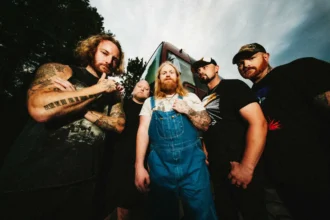
In January 2026, Finnäs put the band in one room and let them play. He drummed alongside Sigurdur Rögnvaldsson on guitar, Staffan Strömsholm on keys and Mats Ödahl on bass. Dawn Harght’s vocal arrived later, once the right voice was found. Finnäs produced and mixed it himself. Antti Uusimäki engineered at Ambience Studios, and Svante Forsbäck mastered it at Chartmakers, the Finnish studio whose founder has put the final polish on records by Rammstein, among many others.
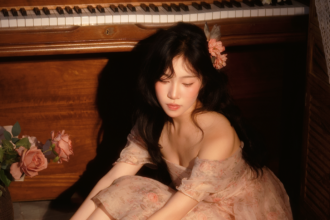
You can hear that room in every bar. The drums are dry and unhurried. The guitars lock together like old friends. The keyboards hang in the air without crowding anyone out. Harght’s vocal carries a clarity that more than one critic tied to Fleetwood Mac, while A&R Factory heard something darker, a Southern Gothic melancholy with a desert-folk edge. The ending is the part people keep mentioning, where the guitars and wordless vocals circle the melody before the whole thing dissolves into silence.
Finnäs would rather write songs than sell them. His ambition is unfashionable, a band that releases albums regularly in a market built for singles. On the evidence of this first one, the patience is working.