


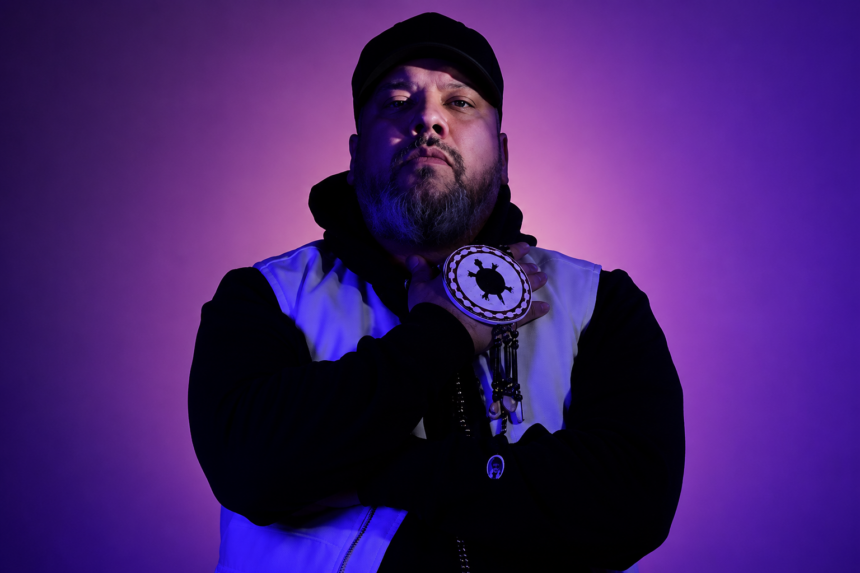
Powwow step pioneer Shub completes his two-part autobiography with ‘Heritage (Part Two),’ featuring Aysanabee, Drezus, DJ Paul and more
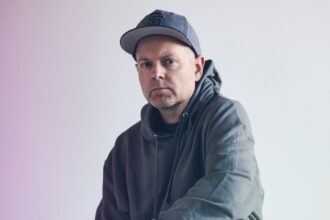
Shub has been building toward this record his whole life. The powwow step pioneer, a founding member of the JUNO-winning group A Tribe Called Red, released Heritage (Part Two) this week, closing out the most ambitious project of his career. Together with last year’s Part One, it forms a two-part autobiography, tracing where the Mohawk producer comes from and where he believes Indigenous music is going.
The story behind the sound is worth knowing. Born Dan General, a member of the Turtle Clan of the Six Nations of the Grand River, Shub grew up around socials, communal gatherings where he absorbed the rhythms of grass dance songs. Years later, he noticed those songs moved at roughly the same tempo as dubstep, around 140 BPM. He fused the two, and powwow step was born. The genre carried A Tribe Called Red to a historic JUNO win and Shub’s own solo work to another, taking Contemporary Indigenous Artist of the Year in 2022 for his album War Club.
Heritage was originally conceived as a single album before Shub split it in two, a decision he has said gave the music room to breathe. Part One laid the foundation with hard-hitting, celebratory rhythms drawn from hip-hop, ’90s IDM, dub-flecked trip-hop and drill bass. Part Two opens everything up. Electronic production, hip-hop and the powwow energy he was raised on sit side by side, unforced. Shub has described the record as simply “the sound of where I’m at right now.”
A Guest List Built Like a Bucket List
The collaborations carry the album. Three 6 Mafia legend DJ Paul appears alongside Natasha Fisher, Aysanabee, Drezus and Sebastian Gaskin, each guest given the freedom to take the tracks somewhere Shub says he never could have alone. The fuzzy, anthemic “Bloodline” and the layered, echoing “Origin” show the range. But the emotional center is “Rise,” the focus track built around Aysanabee’s soaring vocals and a deeply personal Drezus verse about mental health. Aysanabee has described the song as an image of “Indigenous people rising together.” Drezus has spoken about it as a message for people fighting battles nobody else can see.
The “Rise” video deepens that weight. Filmed inside Toronto’s St. Stephen-in-the-Fields church, it honors the endurance of Indigenous communities, placing the song’s message of solidarity inside a space loaded with history.
Culture That Refuses to Stand Still
Shub has always insisted that Indigenous music is not a museum piece. Heritage is his clearest argument yet. He has framed the project as a bridge between generations, taking what ancestors passed down and pushing it forward, insisting the culture “belongs on the biggest stages in the world.” His track record backs the ambition. His single “Indomitable” became the theme to Sacha Baron Cohen’s Who Is America?, and his score for the film The Grizzlies earned a Canadian Screen Award, proof that powwow step travels far beyond the festival circuit.
That reach matters right now. Indigenous artists across Turtle Island, from Snotty Nose Rez Kids to Aysanabee himself, are having a sustained moment, charting, touring and winning major awards on their own terms. Heritage (Part Two) lands as both a celebration of that momentum and a reminder of who helped open the door. Shub spent a decade proving traditional drums and modern bass belong together. Now he is documenting what that fight built, and inviting everyone in. The record asks one simple thing of its listener: forget everything else for a moment, take it in, and feel free.