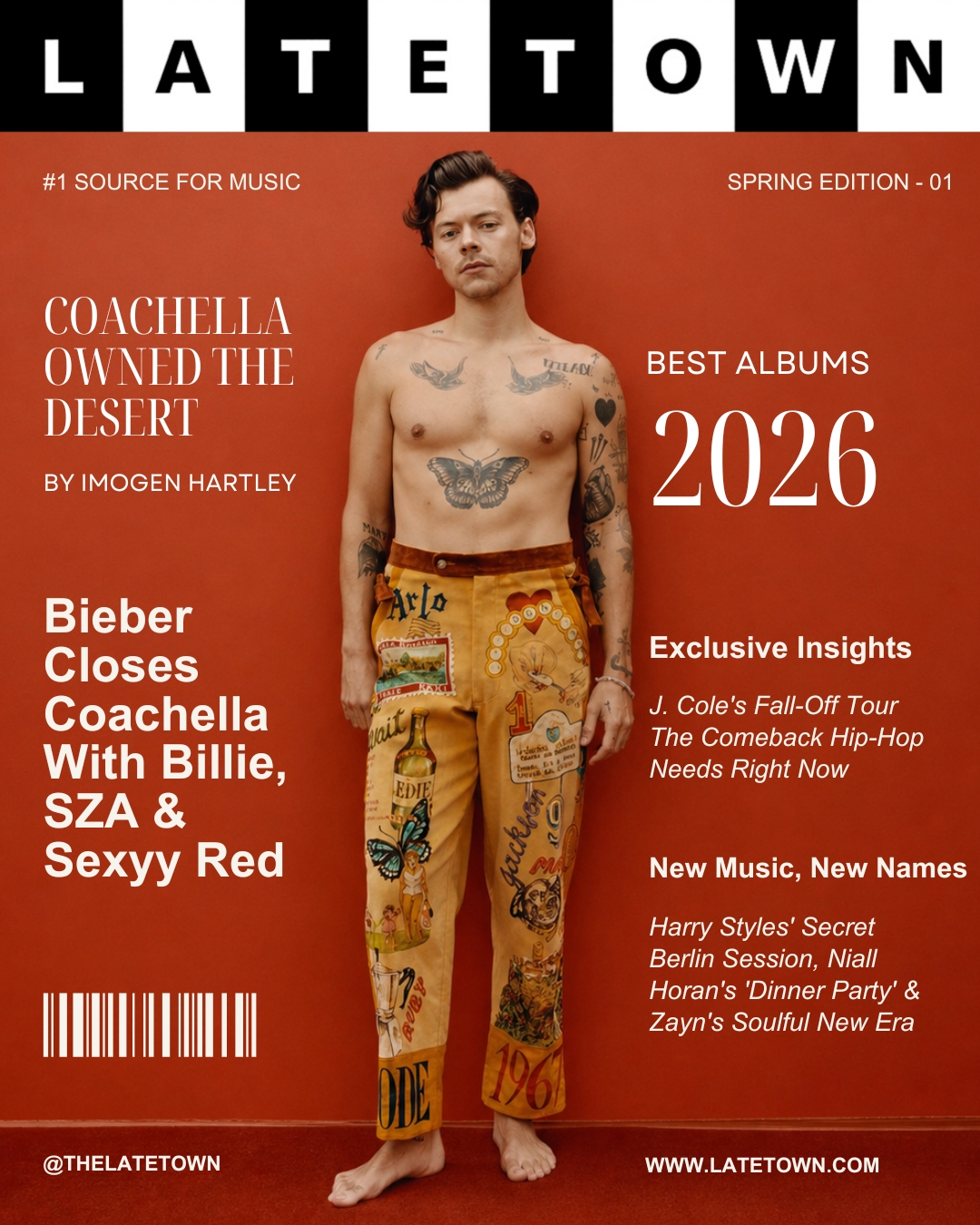

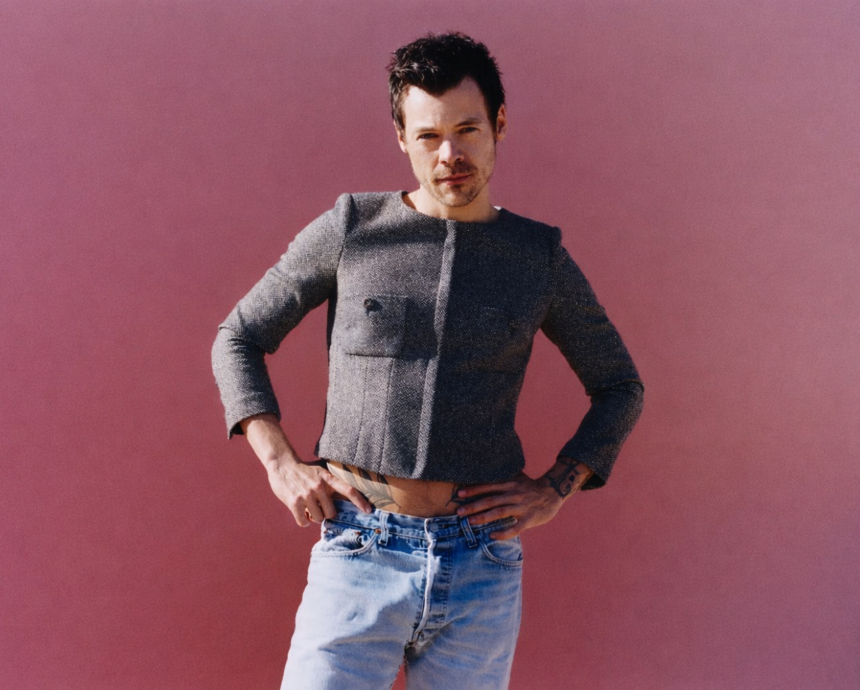
Harry Styles’ fourth album ‘Kiss All the Time. Disco, Occasionally.’ subverts expectations with restrained electronic pop and one undeniable banger
Harry Styles spent nearly three years doing almost nothing in public. No new music, no promo cycle, no curated drip of content designed to keep an algorithm warm. He moved to Italy. He cooked. He ran a marathon in Berlin while listening back to his own demos. When “Aperture” landed on January 22, 2026 and shot to number one on both the UK Singles Chart and the Billboard Hot 100, the silence had done its work. The distance between eras had become the story, and it gave his fourth album, “Kiss All the Time. Disco, Occasionally.,” released March 6 via Erskine and Columbia Records, a gravitational pull that most pop records simply do not have.
The question now is whether the album itself earns that gravity. The short answer is yes, but not in the way anyone expected, and not immediately.
Produced by Kid Harpoon and Tyler Johnson, with background vocals from Ellie Rowsell and the House Gospel Choir, “Kiss All the Time. Disco, Occasionally.” is a 12-track record that opens wide promises with its title and then spends most of its runtime deliberately not keeping them. The Berlin nightclub inspirations Styles has cited in interviews, the LCD Soundsystem influence he described as foundational, the disco suggestion embedded in the album’s own title, all of it points toward something looser and more kinetic than what actually arrives. Most of these songs don’t groove. They pound. They restrain. They hold back in a way that feels intentional and, crucially, earned.
An Album That Demands Patience
That holding back is the album’s defining characteristic, and its most divisive one. The upbeat and promisingly named “Ready Steady Go“ stomps where it could swing. The electronic textures are heavy throughout, but the beats tend toward industrial rather than euphoric. There are almost no guitars. “Coming Up Roses“ strips everything away entirely, leaving Styles alone with a piano and an orchestra in a moment of genuine emotional exposure. “Season 2 Weight Loss” is, somewhat bafflingly, one of the least memorable entries despite having one of the most memorable titles.
But the album reveals itself in layers, and the reward for patience is real. “Taste Back“ and “The Waiting Game“ carry the record’s most immediately accessible melodies. “Pop” is anchored by a Daft Punk-esque arpeggiated synth hook that earns its name without being obvious about it. “Carla’s Song“ closes the album as a piece that, in the right live arrangement, could become the kind of exuberant, confetti-dropping set-closing anthem Styles has built a career on.
And then there is “Dance No More,” the tenth of twelve tracks, sequenced so far back in the record that it almost feels like Styles is testing whether you made it. With a funky groove, sharp ’80s synthesizer stabs, party sounds and a chorus built around “DJs don’t dance no more,” it is the only song here that fully delivers on the album’s disco promise. It is also, immediately, a prime candidate for Song of the Summer 2026. The fact that it is followed directly by the slow, acoustic-led ballad “Paint by Numbers“ is either a deliberate act of subversion or a very good joke. Probably both.
The Live Equation
What makes all of this land, and what gives the slower sections of the album their justification, is the understanding that Styles’ songs frequently transform on stage. His “Aperture” performance at the 2026 BRIT Awards on February 28 at Manchester’s Co-op Live made the case more dramatically than any review could. What had read on record as a measured, low-key electronic pop track became a full spectacle: dozens of dancers, a gospel choir, elaborate hand choreography, and an arena of 23,500 people losing themselves in it completely. The performance amassed over 1.4 million YouTube views within a single day.
That is the longer game Styles is playing. “Kiss All the Time. Disco, Occasionally.” debuted at number one on the Billboard 200 with 430,000 album-equivalent units in its first week, the biggest US debut week by any album in 2026 and the biggest opening for a solo male artist since Morgan Wallen’s “I’m the Problem” in 2025. Its 186,000 vinyl sales marked the biggest ever week on vinyl for a male artist since Luminate began tracking the format electronically in 1991. The commercial infrastructure for this album is enormous. The artistic gamble is that the songs themselves are written for a live context where a band, a room, heat, and momentum can unlock what the studio recordings deliberately leave latent.
By that logic, the restraint on this album is not a flaw. It is a setup. Styles is not withholding the party. He is saving it for when it counts, specifically for the “Together, Together” tour, which runs from May through December 2026, including a 30-show Madison Square Garden residency beginning August 26 and a Wembley Stadium run in June. If “Aperture” at the BRITs is any indication of what the live versions of these songs become, the album’s chill factor will read, in hindsight, as the quiet before something genuinely spectacular.
“Kiss All the Time. Disco, Occasionally.” is not the immediate gratification record that a portion of his audience wanted. It is something more interesting than that. It is an album by an artist who knows exactly how much to give and when to hold back, built for the long run, designed to deepen with each listen and to fully ignite on a stage.
The banger is in there. So is everything else. You just have to let it come to you.