



Spotify launches swipeable carousel ads and branded playlist takeovers, targeting full-funnel ad dollars from brands beyond audio-only budgets
Spotify is making its most aggressive push yet into visual and interactive advertising. On Tuesday, the streaming giant announced the rollout of swipeable carousel ads and a revamped sponsored playlist offering, moves that signal the platform’s intent to compete directly with Meta, TikTok, and Google for a broader share of brand marketing budgets. The formats are live now for free-tier users and mark a meaningful shift in how Spotify positions itself to advertisers.
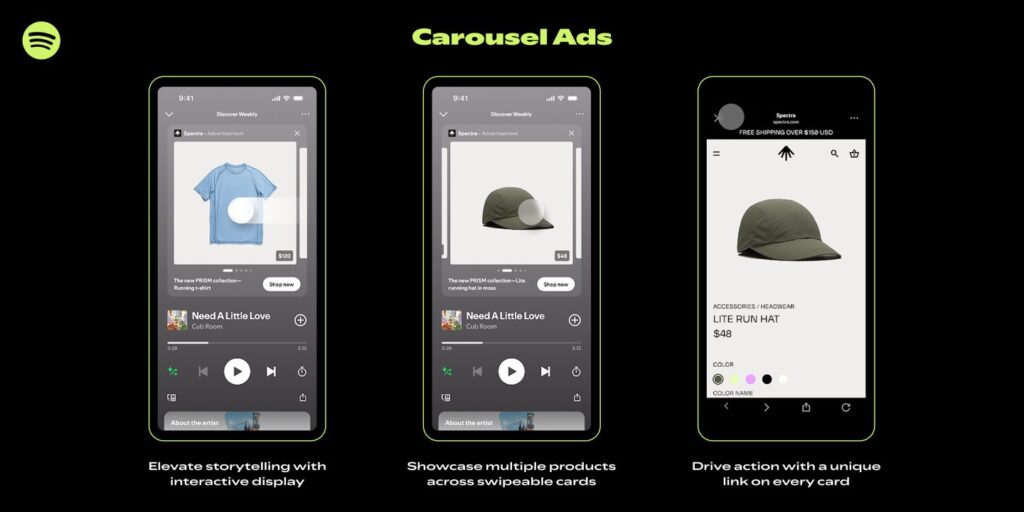
The carousel ads appear in the app’s Now Playing view, placing up to six swipeable cards in front of users while they actively consume content. Each card carries its own image, link, description, and optional pricing or promotional detail. It is a format Meta popularized in the mid-2010s, but Spotify is entering the space at a moment when its own user behavior has shifted significantly toward visual consumption, driven by the platform’s push into music videos and video podcasts. Early beta testing with Priceline, eBay, and GNC showed the format drove strong engagement, and the company says time spent in-app has climbed 26%, with click-through rates for audio and video ads up 14% among ad-supported users.
RapCaviar and Today’s Top Hits Are Now Ad Real Estate
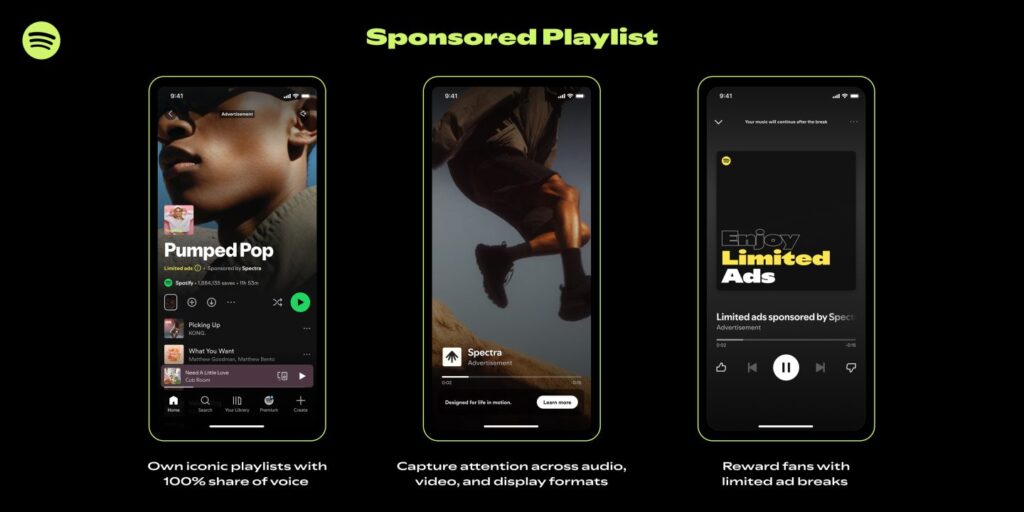
The second major launch is a reimagined sponsored playlist product that gives a single brand full share of voice across some of Spotify’s most culturally influential destinations: RapCaviar, Today’s Top Hits, and New Music Friday. Advertisers who purchase a playlist takeover see their name appear prominently on the playlist’s main page, their ads run exclusively throughout playback, and listeners receive fewer ad breaks in exchange. It is a trade that benefits all three parties: the brand, the platform, and arguably the listener.
“The user experience is becoming a much more interactive, audio and visual experience,” said Brian Berner, Spotify’s global head of advertising revenue and partnerships. “It’s just time for us to make sure that our ad strategy reflects the trends we’re seeing and the user engagement we’re seeing from our consumers.”
Spotify also added A/B testing capabilities and automated bidding directly into its Ads Manager, the latter powered by machine learning to optimize ad delivery and spend in real time. These are not novel features in the broader digital advertising landscape, but their addition tightens Spotify’s competitive position.
Spotify Wants to Be Taken Seriously as a Full-Funnel Platform
The announcement arrived alongside new proprietary research titled “The Sound-On Era,” drawn from surveys of more than 5,000 consumers, 105 advertisers, and 30 industry experts. The headline data point Spotify leads with is compelling: on average, users spend two hours per day on the platform, and 90% make it part of their daily routine. For brands weighing where to allocate spend in an increasingly fractured media environment, those engagement numbers are the argument.
Berner is direct about the ambition: “What we’re trying to build from an ad strategy is to challenge that preconceived notion of audio just being an upper funnel reach play and build a full-funnel suite.” He stopped short of claiming overnight transformation, but the five-year trajectory is clear. Spotify already launched a global ad exchange last spring and introduced generative AI tools for custom audio ad production at no extra cost. More AI-driven updates are planned for the remainder of this year.
The pitch to brands resisting the shift is straightforward, as Berner put it:
That’s advertising 101: Fish where the fish are”