

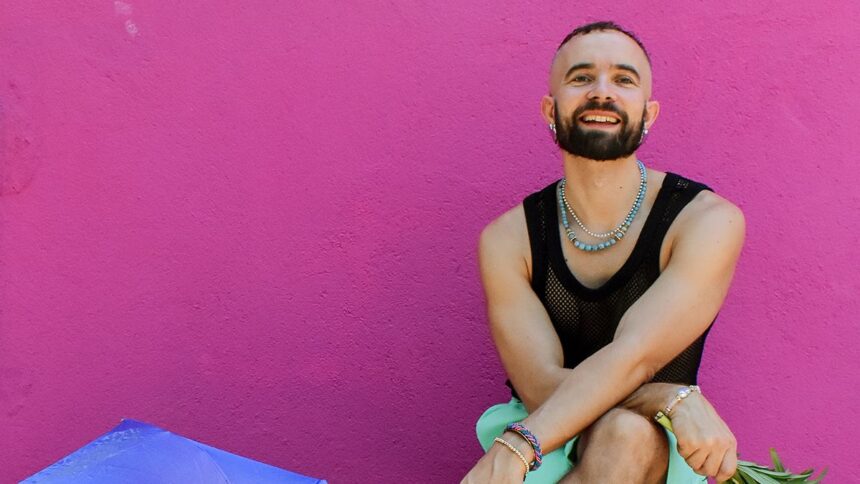
Olof Dreijer’s debut solo album ‘Loud Bloom’ is a 14-track triumph of unconventional dance music, 25 years in the making via DH2
Twenty-five years is a long time to sit on a debut. But Olof Dreijer has never operated on anyone else’s timeline. The Swedish producer, best known as the architectural force behind the Knife alongside his sibling Karin, released ‘Loud Bloom‘ on May 8 via DH2, a 14-track debut album that arrives not as a victory lap but as a genuine act of self-excavation. It is one of the most distinctive electronic records of the year, and it earns that distinction without announcing itself.
For those tracking Dreijer’s movements over the past decade, the shape of this moment has been visible for some time. After the Knife’s final album, ‘Shaking the Habitual’, he stepped back from music almost entirely, choosing to run a music school for refugees in Berlin, remix artists like Emanuel Jar, and mentor immigrant kids in creative production in his native Sweden.
I started to feel that we didn’t need any more people like me in the music industry, which was already very white and male,” he said. “So I stepped back, and it took me maybe ten years to come around from that”
The comeback was gradual: a string of club EPs from 2023 onward, four tracks on Fever Ray‘s ‘Radical Romantics’, remixes for Björk and Rosalía. ‘Loud Bloom’ is where that process resolves.
A Dance Album That Refuses to Stay in Its Lane
The record’s first half operates as pure kinetic pleasure. Dreijer makes everything himself, rejecting sample libraries in favour of building his sounds from scratch. “To me, sequencers are very inhuman and boring,” he has said. “I make all my sounds from scratch and play everything myself. The percussion, all of it.” The results are unmistakable. His synth tones carry a tactile logic, melodic shapes bending and curving in ways that no preset could produce. ‘Rosa Rugosa‘ and ‘Plastic Camelia‘ establish the register immediately: warm, sun-lit, and densely rhythmic, with undercurrents of Chicago house filtered through a sensibility that is entirely Dreijer’s own.
The album’s featured artists deepen its range without diluting its focus. Cairo-based Sudanese singer MaMan elevates ‘Echoed Dafnino’ into something festival-sized and quietly euphoric. Colombian-Swedish MC and percussionist Diva Cruz, familiar from the 2024 ‘Brujas’ EP, brings an earthy vitality to ‘Acuyuye’, a track Dreijer describes, with characteristic self-deprecation, as simply “a song about food.” South African MC Toya Delazy, singing across Zulu and English, gives ‘Makwande’ a house-rooted sensibility that sits perfectly against Dreijer’s production. The collaborations feel earned rather than assembled.
The Second Half Shifts, and That Is the Point
At track nine, the album pivots. The beats recede and Dreijer moves into what he calls microtonal and calmer jazzy improvisations. ‘Fern Valley’ is eight minutes of nylon-string electronics drifting toward ambient space. ‘Verbena’ dims the neon further. This half of the album will not please everyone, and Dreijer knows it. “I’m trying to do something that I feel is less commodified,” he has said. That transparency matters. The conceptual anchor here is Nigerian author Akwaeke Emezi, whose ability to make bold, progressive ideas accessible through intimate storytelling clearly shaped how Dreijer thinks about the tension between accessibility and intention on this record.
The album takes its title seriously. ‘Loud Bloom’ describes both the record’s sonic register and its emotional stakes. Dreijer has said the album has “a lot to do with self-love,” and after a decade of systematic self-erasure in service of others, that reorientation carries real weight. This is not a comeback built on nostalgia for the Knife. It is something more interesting: a 25-year pedigree used not to repeat itself but to finally say something new.