

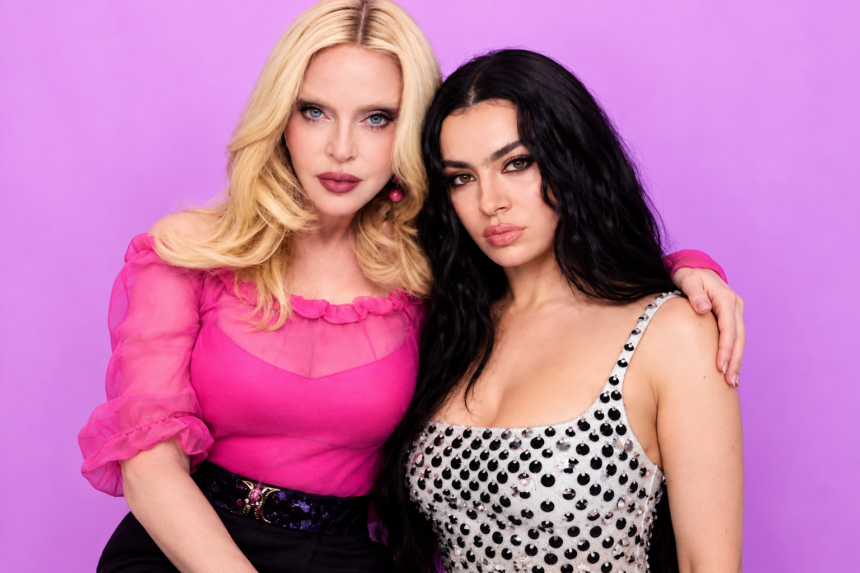
Madonna and Charli xcx release ‘Danceteria Afterhours’ Sept. 24, a remix of the ‘Confessions II’ track, days before the 2026 VMAs
Madonna is turning Confessions II into a collaboration engine, and her latest partner is the artist who once declared the dance floor dead. The Queen of Pop announced Monday (Sept. 21) that she and Charli xcx have reworked “Danceteria,” the Stuart Price-produced cut from her chart-topping 15th studio album, into “Danceteria Afterhours,” out Thursday (Sept. 24) via Warner Records. The release lands three days before the 2026 MTV Video Music Awards, where Madonna leads the field with 13 nominations.
The single is available to pre-save now, and three limited-edition CDs, in purple, white and black, are up for pre-order. A press release frames the pairing as a celebration of the early risks and influences that shaped both artists’ careers.
A Remix Strategy With Momentum
“Danceteria Afterhours” follows a proven template. In August, Madonna and Kylie Minogue released “Love Sensation (Afterhours Mix),” their first-ever joint release, days after performing the song together at WorldPride Amsterdam. That remix arrived after the original “Love Sensation” reached No. 1 on Billboard’s Dance Airplay chart, and it gave the album a second wave of attention a month into its run.
The album has plenty of commercial weight behind it. Confessions II debuted at No. 1 on the Billboard 200 dated July 18 with 134,000 equivalent album units, the biggest week for a dance album this year and Madonna’s best week since the chart moved to a units-based ranking in December 2014. It became her 10th No. 1 album and made her the first act with a No. 1 album in the 2020s to have also topped the chart in three other decades.
Pairing each remix with a peer or successor keeps the album moving across radio, streaming and the club circuit. Adding Charli, whose 2024 album Brat reshaped pop’s relationship with club culture, extends that reach to a younger audience that came of age on her records.
From Beef Rumors to the Dance Floor
The collaboration also closes a storyline fans have followed all year. When Charli’s “Rock Music,” the lead single from her album Music, Fashion, Film, included a line declaring the dance floor dead, Madonna appeared to answer on Instagram, suggesting that anyone who felt that way might be playing the wrong songs. The exchange set off talk of a rift.
Speculation turned the other direction in late June, when the two sat side by side at Saint Laurent‘s spring/summer 2027 menswear show in Paris. At Madonna’s Club Confessions afterparty that night, a snippet played with both of their names projected on a screen. Charli, for her part, has long praised Madonna, calling her “just the one” in an interview earlier this year.
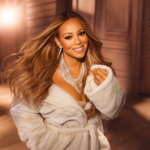
The official teaser picked up where the afterparty left off. In the clip, the two dance in a white studio while Madonna, in a red hoodie printed with a photo of her ’80s self, asks whether listeners want to talk about “Madonna and Charli.” Her caption pointed back to New York: “Let’s take it to the East side baby.”
That history is the point. “Danceteria” is named for the Manhattan nightclub on West 21st Street where, in the early 1980s, DJ Mark Kamins played Madonna’s demo of “Everybody,” a record that reached Sire Records founder Seymour Stein and led to her first contract. The club, which closed in 1986, is also where she met longtime friend Debi Mazar, and both Kamins and Mazar are name-checked in the song.
The timing gives the single an immediate stage. Madonna is set to perform at the VMAs on Sunday (Sept. 27) in Los Angeles, her first live appearance at the ceremony in 23 years, dating back to her 2003 performance with Britney Spears. Whether Charli joins her there has not been announced.
For a Confessions II campaign built entirely around the dance floor, the message from both camps is clear. It is very much alive.