



Violet Grohl strips down The Cure’s ‘High’ to acoustic for Triple J’s Like a Version, honoring Robert Smith. Watch the cover
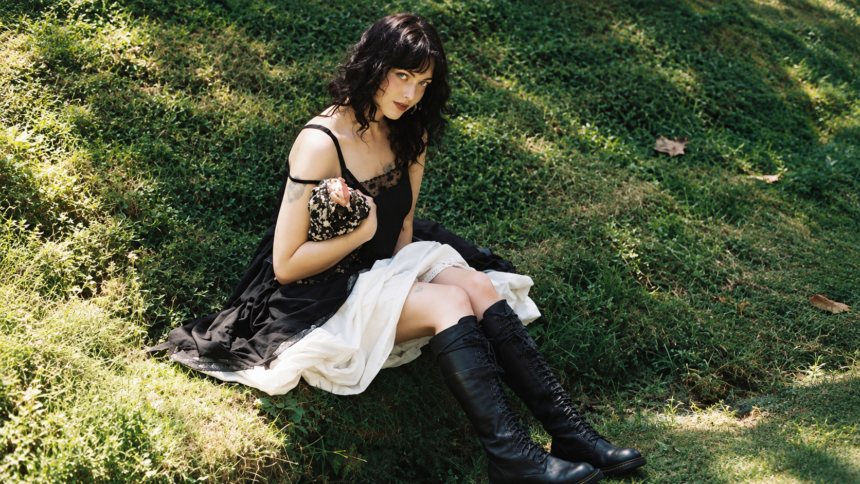
Violet Grohl walked into the Triple J studios this week with a single acoustic guitar and one of The Cure‘s most quietly revered songs, and she left with a Like a Version entry that trades spectacle for intimacy. On Friday, September 4, the 20-year-old singer-songwriter made her debut on the long-running Australian radio segment with a stripped-back cover of “High,” the lead single from The Cure’s 1992 album Wish. Where the original wraps Robert Smith‘s vocal in shimmering, layered guitar work, Grohl peeled it all away, leaving only her warm alto and six strings at center stage.
It is a bold reading of a track that Cure devotees hold close, and Grohl knew exactly what she was risking. Rather than mimic Smith’s commanding delivery, she leaned into her own melodic phrasing, the same hazy, dream-leaning sensibility that runs through her recently released debut album, Be Sweet To Me. The choice pays off precisely because there is nowhere to hide.
A Lifelong Cure Fan Pays Tribute
For Grohl, “High” was never an obvious crowd-pleaser, and that was the point. “This is one of my favourite Cure songs, and I don’t really know exactly why,” she told Triple J. She traced her fandom back to age 12 or 13, when hearing “Friday I’m in Love” sent her tumbling into the band’s catalog. “I love the childlike joy of the lyrics,” she said of “High.” “It’s such a cute love song, and I love all the imagery.” She added that she wanted the performance to hold onto a “teenage crush kind of feeling.”
Her admiration for the band’s frontman is unreserved. “I adore Robert Smith,” Grohl said, calling him “a unique, special human being” with no equal. In doing so, she joined a growing chorus of young female artists, including Olivia Rodrigo, Lola Young, and Ruby Fields, who have publicly professed their love for the seminal British group. The timing tracks with a broader Cure resurgence, as the band’s 2024 album Songs of a Lost World reintroduced them to a generation that grew up on their catalog secondhand.
Establishing a Voice of Her Own
The cover arrives at a pivotal stretch for Grohl, who released Be Sweet To Me on May 29 through Auroura and Republic Records. The 11-track record, produced largely by Justin Raisen, draws openly on the alternative rock landscape of the late ’80s and early ’90s, with The Cure, Cocteau Twins, the Pixies, Soundgarden, and the Breeders all in its DNA. Choosing a ’90s-era Cure deep cut for her Like a Version debut is another data point in a clear pattern: Grohl is building an identity rooted in hazy, evocative sonics rather than the hard-rock lineage her surname might suggest.
As the eldest daughter of Foo Fighters frontman Dave Grohl, she has made peace with the nepo-baby conversation. “Obviously, doors are open for me because of my last name,” she has said. “It’s not something I’m ever going to hide behind. I don’t care, I really don’t.”
Alongside the cover, Grohl performed her own song “595” from Be Sweet To Me, delivering it in the same acoustic register that gave the whole session an MTV Unplugged quality. She also spoke about her devotion to playlist culture, describing how she spends her spare time digging through streaming platforms and building playlists. “It’s just the most beautiful and fun thing in the world to me,” she said. “The way that people can bond over music or share stories about music and cry together, whatever it might be. It’s a really beautiful thing.”
The performance lands mid-campaign for Grohl, whose sold-out headlining run has carried her across Europe, the UK, and North America, with fall festival slots at Riot Fest, Shaky Knees, CBGB Festival, and Corona Capital still to come. The Cure cover is a small, self-assured statement in that larger arc, proof that Grohl can honor her heroes without disappearing behind them.