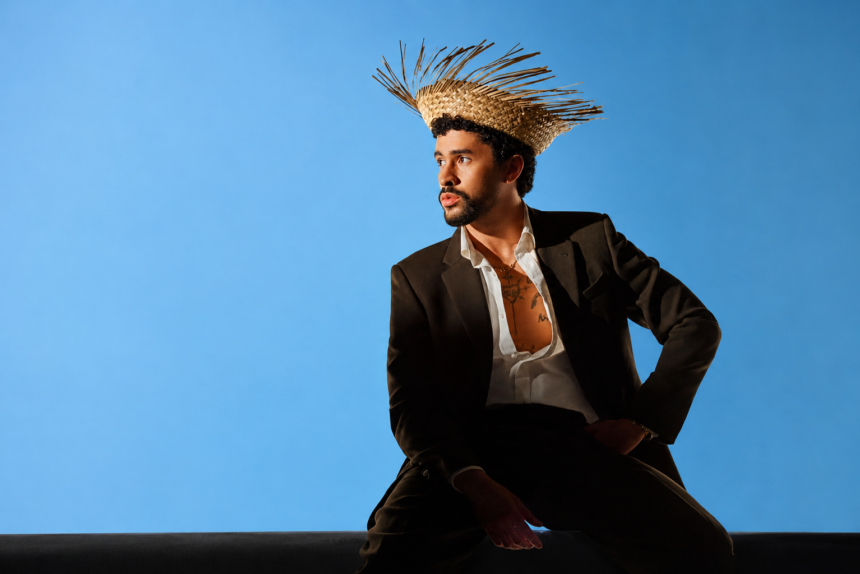
Bad Bunny won his first Emmy as his Super Bowl LX Halftime Show swept seven awards, the most in halftime history
Bad Bunny is officially an Emmy winner, and he did not do it quietly. On Saturday (Sept. 5), the Puerto Rican superstar claimed his first Emmy Award as the Apple Music Super Bowl LX Halftime Show Starring Bad Bunny swept all seven categories it was nominated in on the opening night of the 2026 Primetime Emmys, formerly the Creative Arts Emmys, at the Peacock Theater in Los Angeles. The haul instantly rewrote the record books and pushed one of music’s biggest stars a meaningful step closer to EGOT status.
The centerpiece win was Outstanding Variety Special (Live), which Bad Bunny, born Benito Martínez Ocasio, received as both a performer and a producer. That victory alone was historic, making his February performance only the second Super Bowl halftime show ever to win the top program prize, following the 2022 hip-hop show, and the first Spanish-language program to claim the category.
The Most-Awarded Halftime Show Ever
The scale of the sweep is unprecedented. With seven total wins from a record nine nominations, the show became the most-awarded Super Bowl halftime performance in Emmy history, surpassing that 2022 Dr. Dre-led show, which won three. Beyond the top prize, the production took home Emmys for music direction, directing for a variety special, choreography, sound mixing, lighting design, and technical direction and camerawork, dominating night one as the evening’s most-awarded program.
Bad Bunny technically has a claim to an eighth statuette, too. The Season 51 opener of Saturday Night Live that he hosted won Outstanding Makeup for a Variety, Nonfiction, or Reality Program, giving a second Bad Bunny-fronted production an Emmy on the same night, though that award goes to the show’s makeup team rather than to him.
The February performance was a genuine cultural event. Across a 13-minute cinematic set at Levi’s Stadium, Bad Bunny ran through a wide range of his biggest hits, including “Tití Me Preguntó,” “BAILE INoLVIDABLE,” “El Apagón,” “NUEVAYoL,” and “DtMF,” while weaving in a love story and threads of Puerto Rican culture, with Lady Gaga and Ricky Martin also appearing. “The only thing more powerful than hate is love,” he told the crowd, a pointed message given the noise that surrounded his selection. On Saturday, Emmy voters answered with a show of love of their own.
An EGOT on the Horizon
The win reshapes the conversation around Bad Bunny’s trophy case. At 32, he now holds an Emmy and three Grammy Awards, including a third Best Música Urbana Album trophy for Debí Tirar Más Fotos. That leaves only a Tony and an Oscar between him and the rare EGOT, a milestone that suddenly feels less like fantasy than a realistic long-term target for an artist expanding aggressively across mediums.
The recognition is of a piece with a career operating at full throttle. Debí Tirar Más Fotos has been a juggernaut, sweeping six honors at Premio Lo Nuestro including Artist of the Year, and his Debí Tirar Más Fotos World Tour recently notched another No. 1 on Billboard’s monthly Top Tours chart, his 10th time atop that ranking since 2019. Few artists in any genre are moving with his combination of commercial force and cultural weight.
The night was a milestone for his collaborators as well. Jay-Z, an executive producer on the halftime show through Roc Nation, added another Emmy to his own shelf, becoming a two-time winner in the variety-special category. For Bad Bunny, though, the story is simpler and larger. A Spanish-language, Puerto Rico-centered spectacle just became the most decorated halftime show in Emmy history, and the genre-and-language barriers that once defined the mainstream look a little more porous for it. The 2026 Primetime Emmys continue, with the main ceremony set for Sept. 14.