


DownTown Mystic’s ‘Mystic Highway Road Trip’ EP delivers six roots-rock cuts built on analog warmth and E Street muscle
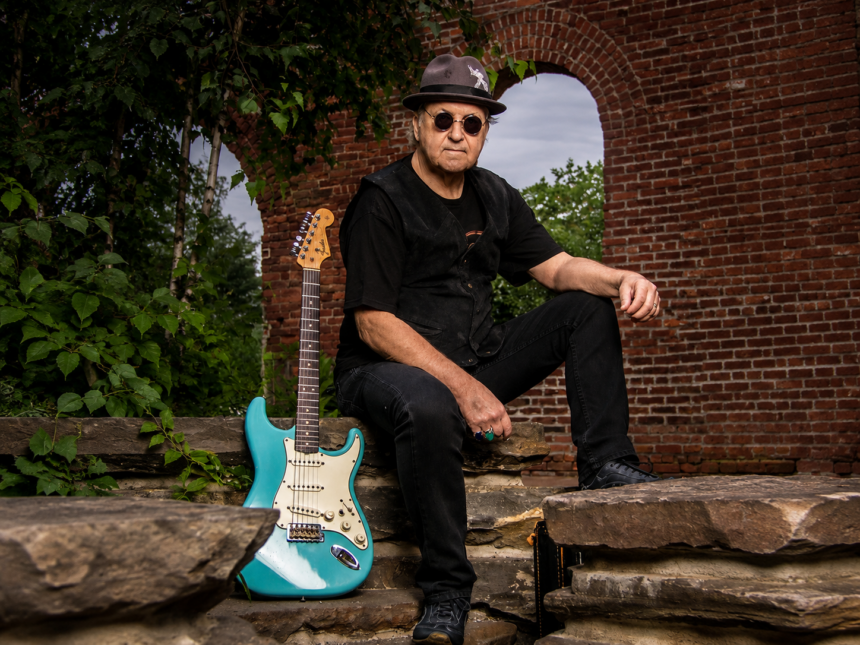
DownTown Mystic did not set out to make a concept record about the open road. The idea arrived secondhand, handed over by listeners. When Robert Allen released the “Mystic Highway” EP in 2025, reviewers kept reaching for the same phrase to describe it: a great soundtrack for a road trip. Rather than ignore the accident of consensus, Allen leaned into it. “Mystic Highway Road Trip,” released August 11, 2026, is the result, a six-song EP that takes the compliment literally and turns it into a mission statement. This is rock built for windows-down driving, late-summer restlessness, and the old American idea that the journey outranks the destination.
Allen, the songwriter and producer who operates under the DownTown Mystic banner, treats “vintage yet modern” less like a slogan and more like a working method. He has described his devotion to old-school recording as bordering on obsession, and the EP bears that out. Rather than chasing digital perfection, the production celebrates analog character: guitar tones that ring with genuine warmth, drums that land with weight, arrangements that breathe. It is a deliberate stance in a rock landscape increasingly flattened by convenience, and it gives these six songs a lived-in quality that reads as conviction rather than nostalgia.
A Cast That Earns the Billing
The names surrounding Allen do a lot of the heavy lifting, and they are not decorative. The rhythm section pulls from one of the most storied in American rock, with Max Weinberg and Garry Tallent of Bruce Springsteen’s E Street Band anchoring the low end alongside drummer Steve Holley (Paul McCartney, Elton John) and bassist Paul Page (Dion, Ian Hunter). Keyboardist Jeff Levine adds piano and Hammond B-3, and Jerry Fierro’s harmonica lends “Live” a dusty, earthbound soul. Recorded at Shorefire Studios in West Long Branch, New Jersey, engineered by Joe DeMaio, and mastered by Leon Zervos at Studios 301 in Australia, the EP has the polish of players who serve the song rather than compete for the spotlight.
The material itself moves in clear gestures. “Superstar (To Sir Elton with Love Mix)” opens the set with theatrical ambition, a celebration of the thrill of chasing a dream. “Live” answers with survival-minded grit, and “Losing My Mind (Re-Mix)” digs into the restlessness of modern life and the sensation of being pushed to the edge. Together they establish the EP’s central tension, optimism weighed against the pressures of forward motion, without ever letting the momentum stall.
Where the Journey Deepens
The back half is where the record finds its texture. “Shadow Walk” slows into introspection, threading memory and uncertainty through the EP’s most atmospheric passage and arguably its strongest moment. “Fly (Buddy Holly Mix)” nods hard toward the innocence of early rock ‘n’ roll, but delivers the homage with enough personality to sidestep novelty. The closer, “Somebody’s Always Doin’ Something To Somebody (Uncut Mix),” is a gritty roots-rock reckoning with human conflict and everyday noise, lifted by Levine’s organ into something that grins as it grooves.
Allen’s touchstones are audible throughout: Tom Petty, Springsteen, Buffalo Springfield, Rockpile. But he avoids the trap of imitation by keeping the focus on craft, melody, and emotionally grounded storytelling. “Why not take your own Mystic Highway Road Trip and have a rockin’ summer!” Allen offered, and the EP makes the invitation feel less like marketing than genuine belief. In a moment obsessed with reinvention, “Mystic Highway Road Trip” argues that a well-built song still outlasts the trend cycle. It is a modest record with an unfashionable faith, and that faith is exactly what makes it land.