




Galaxy Corp., G-Dragon’s AI-powered K-pop agency, targets a dual NYSE and Seoul IPO by 2027 with a $679M unicorn valuation
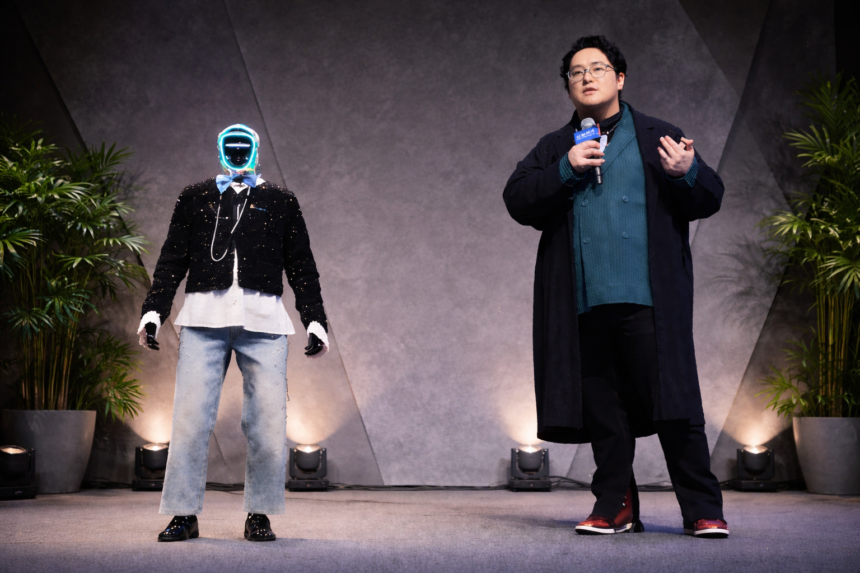
Inside a Seoul office designed to look like a crash-landed spacecraft, humanoid robots in luxury hip-hop outfits snap into formation and move in perfect sync to K-pop songs. The demonstration is orchestrated by Choi Yong-ho, 37, founder and CEO of Galaxy Corp., and it is less a product showcase than a provocation. The Seoul-based startup, now valued at 1 trillion won (approximately $679.8 million) after completing a pre-IPO fundraising round that exceeded 100 billion won last December, is preparing what would be the first overseas stock listing by a K-pop agency, targeting dual listings in New York and Seoul by 2027.
The pitch is audacious: replace the traditional K-pop idol pipeline, built on years of recruiting, training and managing human talent, with an AI-driven model that can produce stars on demand, scale them without physical limits, and monetize them continuously. Galaxy has already raised approximately $150 million in total accumulated funding, with investors including K-pop icon G-Dragon, Taiwanese singer-songwriter Jay Chou, and more than 30 Korean institutional backers. Nasdaq Vice Chairman Bob McCooey visited Galaxy’s headquarters in Seoul earlier this year to assess the possibility of a U.S. listing, an unusual move that sent a clear signal about the seriousness of the company’s ambitions.

G-Dragon Is the Engine, but the Vision Goes Further
Galaxy’s trajectory changed decisively in late 2024, when Kwon Ji-yong, better known as G-Dragon, the leader of legendary K-pop group BIGBANG, signed a management contract with the company. The deal came after Choi supported Kwon through a 2023 drug investigation for which the artist was later cleared. At the time, Galaxy was primarily known as the production company behind Netflix’s hit competition show Physical:100. Kwon’s signing, which included a reported 20 billion Korean won signing bonus and stock options, shifted the company’s entire center of gravity. Revenue surged from approximately 41.6 billion won annually before G-Dragon’s signing to 126 billion won in just the first half of 2025 alone. G-Dragon is set to perform at Coachella this weekend with BIGBANG, keeping him at the center of global pop culture at precisely the moment Galaxy needs the world watching.
But Choi has made clear that G-Dragon is the launch vehicle, not the destination. Galaxy is working with the production team behind London’s ABBA Voyage to develop a virtual concert format for Asia, targeting a 3,000-seat venue opening around late 2027. G-Dragon’s performance has already been filmed in London. The business logic is straightforward. “A human performer can’t perform 365 days a year, but an avatar can,” Choi said. “Millions wanted to attend G-Dragon’s concert but only 1 percent of them could enjoy the show. With this format, 99 percent of the people who wanted to go can actually enjoy the performance.” Galaxy is also planning to debut a four-member virtual girl group in the second half of 2026, using AI tools from startups including Suno and Sora to potentially slash music video production costs by 90 to 99 percent from the typical Korean budget of around $2 million per video.
Wall Street Ambitions Meet Industry Skepticism
The company’s expanded roster reflects its strategy of converting established human IP into scalable virtual assets. Galaxy already represents Parasite actor Song Kang-ho and SHINee’s Taemin. It is also reportedly in talks with singer Kwon Eun-bi, formerly of Iz*One. Choi has articulated a three-stage roadmap: launch a virtual idol group in 2026, introduce robot idols with the same likeness in 2027, then integrate live human performers into the ecosystem by 2028. “We’re combining all three into a multiverse,” he said.
The strategy has drawn serious institutional interest but also pointed scrutiny. Industry sources in Seoul have noted that a significant portion of Galaxy’s current revenue still flows directly from G-Dragon’s concerts and offline events, raising questions about whether the company is genuinely a technology platform or, as one industry source put it, essentially a conventional K-pop agency with a more sophisticated branding operation. Rumors have also circulated that G-Dragon has at times expressed dissatisfaction internally, though no public statement has been made. South Korean music critic Cha Woo-jin framed the broader challenge plainly: “The virtual idol market is in a very early, experimental phase, and fully AI-driven models face limits, especially when it comes to authenticity and how fans perceive the creative process.”
That tension is exactly what Galaxy’s planned IPO will force into the open. The company named after Choi’s two sons, “Galaxy” and “Universe” in Korean, is betting that the next generation of entertainment companies does not just discover stars. It codes them. Whether public markets in New York and Seoul agree will determine if this simulation in a spacecraft-themed boardroom becomes the blueprint for the entire industry.